In the relentless march of technological evolution, the integration of Artificial Intelligence (AI) into humanoid robots represents a paradigm shift, poised to redefine the operational landscapes of service and logistics industries. This dossier delves into the strategic applications, transformative potential, and the profound implications for the global labor market.
I. The Inception of AI-Powered Humanoids in Industry
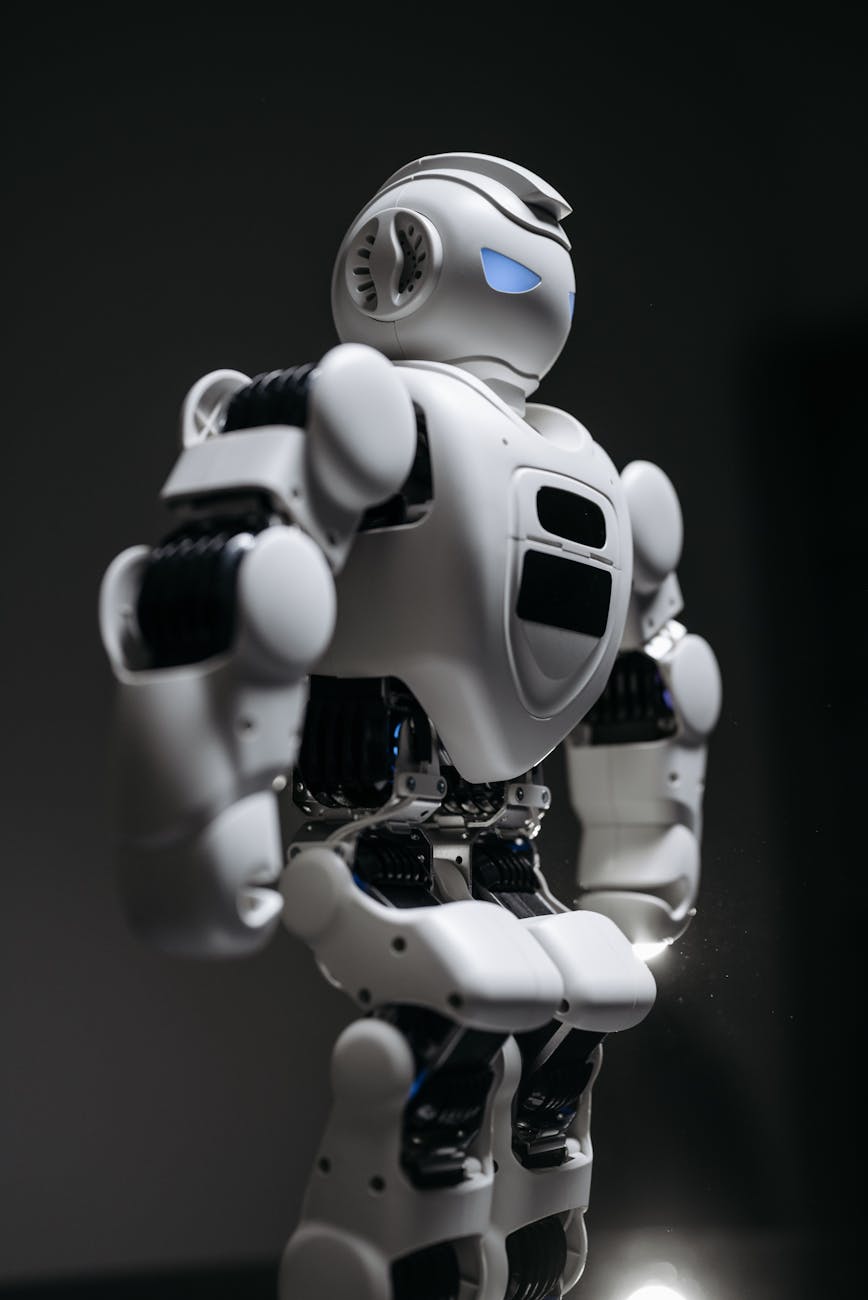
The convergence of advanced robotics, sophisticated AI algorithms, and increasingly powerful edge computing capabilities is birthing a new generation of intelligent machines. Humanoid robots, designed to mimic human form and function, are moving beyond the realm of science fiction into tangible industrial applications. Their ability to navigate complex environments, interact with humans, and perform intricate tasks positions them as ideal candidates for roles demanding dexterity, adaptability, and cognitive processing.
The underlying AI technologies, from deep learning for perception and navigation to natural language processing for human interaction, are maturing at an unprecedented pace. This maturity, coupled with the decreasing cost of hardware and the increasing accessibility of AI development tools, is accelerating the adoption of these advanced robotic systems.

A sleek, futuristic humanoid robot with glowing blue accents is shown in a highly organized, modern warehouse, extending a robotic arm to pick up a package.
II. Strategic Applications in the Service Industry
The service sector, characterized by its diverse and often unpredictable demands, stands to gain immensely from the deployment of AI humanoids. Their potential applications span a wide spectrum:
A. Enhanced Customer Experience
- Personalized Assistance: Humanoids can provide tailored recommendations, answer complex queries, and offer guided tours in retail environments, hotels, and museums, learning and adapting to individual customer preferences.
- Information Dissemination: In public spaces, airports, and train stations, they can serve as intelligent information kiosks, offering real-time updates, directions, and multilingual support.
- Companion and Care Services: For the elderly or those requiring assistance, humanoids can offer companionship, medication reminders, and basic care support, alleviating pressure on human caregivers.
B. Operational Efficiency and Automation
- Hospitality Automation: Room service delivery, cleaning, and basic concierge duties in hotels can be automated, freeing up human staff for higher-value guest interactions.
- Retail Operations: Stock management, inventory checks, and even customer assistance on the sales floor can be handled by humanoids, ensuring consistent service availability.
- Healthcare Support: Beyond companion roles, humanoids can assist in hospitals with tasks like delivering medications, sanitizing rooms, and even aiding in basic patient mobility, under human supervision.
Case Study: ‘Aura’ Hospitality Assistant
A high-end hotel chain piloted ‘Aura,’ a humanoid robot equipped with advanced NLP and facial recognition. Aura successfully managed check-ins, provided personalized city guides, and delivered room service with a 98% guest satisfaction rate, significantly reducing wait times and freeing up human staff for more complex guest issues. The system’s ability to learn guest preferences over time led to repeat bookings and positive online reviews.

A close-up shot of a humanoid robot’s face, displaying a friendly, animated digital screen, interacting with a hotel guest.
III. Revolutionizing Logistics and Supply Chain Operations
The logistics sector, with its emphasis on precision, efficiency, and round-the-clock operations, is a prime area for humanoid robot integration. The challenges of labor shortages, repetitive tasks, and the need for enhanced safety can be addressed through these intelligent machines.
A. Warehouse Automation
- Automated Picking and Packing: Humanoids can perform intricate picking and packing tasks with high accuracy and speed, reducing errors and increasing throughput. Their dexterity allows them to handle a wide variety of product shapes and sizes.
- Inventory Management: Autonomous navigation and scanning capabilities enable humanoids to conduct real-time inventory audits, identify misplaced items, and optimize stock placement.
- Loading and Unloading: Heavy lifting and repetitive loading/unloading operations can be safely managed by humanoids, mitigating risks of workplace injuries.
B. Last-Mile Delivery and Transportation
- Autonomous Delivery: While drones and autonomous vehicles are prominent, humanoid robots can complement these by handling the final doorstep delivery, especially in complex urban environments or multi-story buildings.
- Fleet Management Support: Humanoids can assist in maintenance checks, cleaning, and basic operational tasks for autonomous vehicle fleets, ensuring readiness.
Case Study: ‘LogiBot’ in Distribution Centers
A major e-commerce fulfillment center deployed ‘LogiBot,’ a fleet of AI-driven humanoids designed for warehouse operations. LogiBots autonomously navigated the facility, identified items, picked them from shelves, and delivered them to packing stations. This resulted in a 30% increase in order fulfillment speed and a significant reduction in human error rates for picking and sorting. The robots operated 24/7, adapting to peak demand periods seamlessly.
A wide shot of a vast, automated warehouse at night, with several humanoid robots moving efficiently between towering shelves.
IV. The Nexus of AI, Edge Computing, and Humanoids
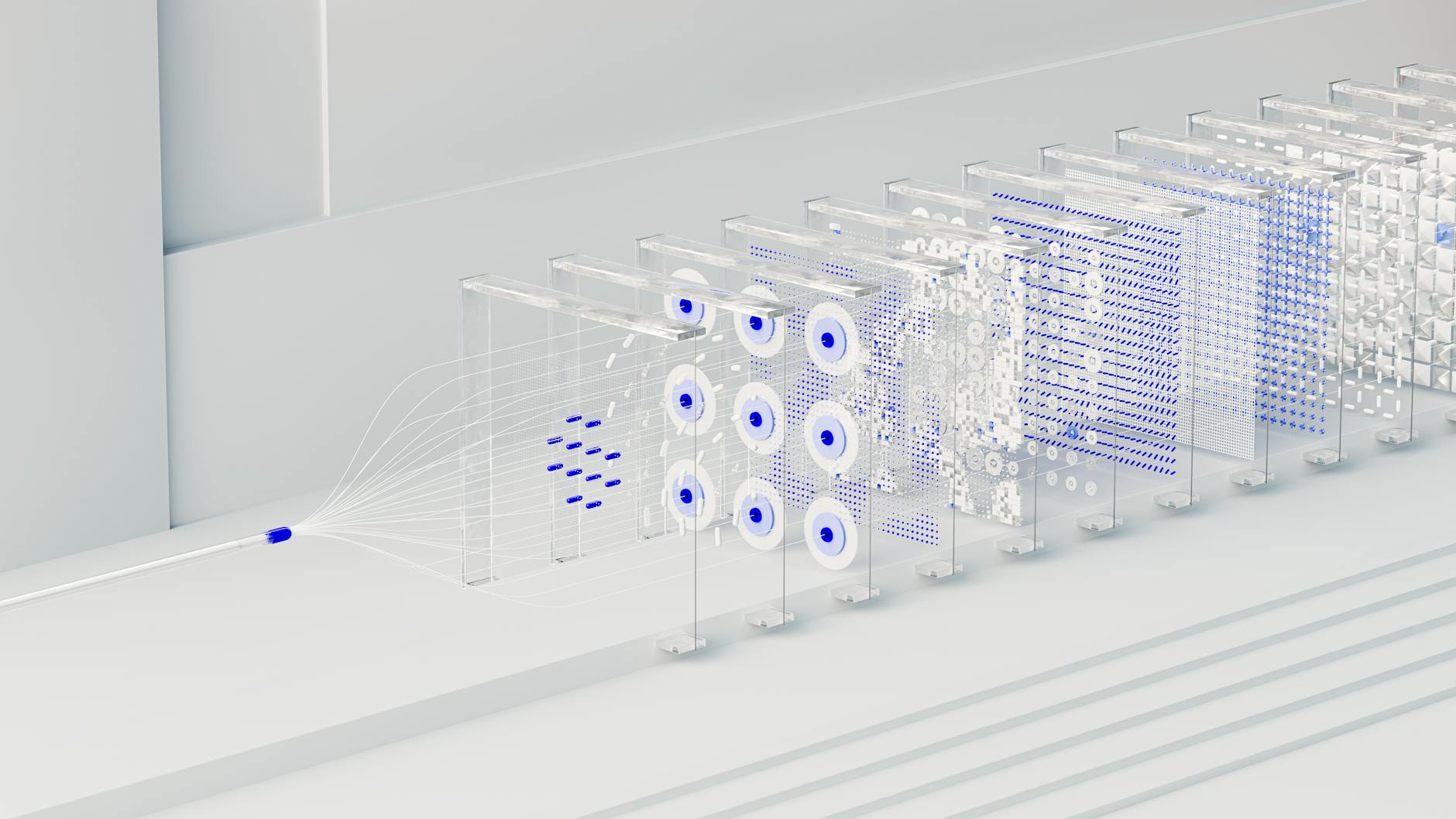
The effectiveness of AI-powered humanoids is intrinsically linked to advancements in edge computing. Processing data closer to the source (i.e., on the robot itself or nearby edge servers) is crucial for real-time decision-making, reduced latency, and enhanced security.
Edge AI allows humanoids to process sensor data, interpret their surroundings, and react instantaneously without relying solely on cloud connectivity. This is vital for tasks requiring split-second adjustments, such as navigating crowded spaces or manipulating delicate objects. Furthermore, by processing sensitive data locally, edge computing contributes to enhanced data privacy and security, a critical concern in both service and logistics environments. This aligns with the growing importance of robust data governance frameworks, as highlighted in discussions around post-quantum cryptography and autonomous archives.
A network diagram illustrating data flow from a humanoid robot to an edge computing device, with labels indicating real-time processing and AI analysis.
V. Future Labor Market Dynamics: Challenges and Opportunities
The widespread adoption of AI humanoids will inevitably reshape the global labor market, presenting both significant challenges and unprecedented opportunities.
A. Displacement and Transformation of Roles
- Automation of Repetitive Tasks: Jobs involving predictable, repetitive physical or cognitive tasks are most susceptible to automation. This includes roles in assembly lines, data entry, and basic customer service.
- Creation of New Roles: Conversely, the deployment and maintenance of these advanced systems will create new job categories. These will include AI trainers, robot technicians, data scientists specializing in robotics, AI ethicists, and human-robot interaction designers.
- Augmentation of Human Capabilities: In many scenarios, humanoids will not replace humans but augment their capabilities. For instance, a human worker might oversee multiple robots, intervening only when necessary, or collaborate with a humanoid on complex tasks.
B. The Imperative for Reskilling and Upskilling
A proactive approach to workforce adaptation is paramount. Educational institutions, governments, and corporations must invest heavily in reskilling and upskilling programs to equip the current and future workforce with the competencies required to thrive in an AI-driven economy. This includes fostering skills in:
- Digital literacy and AI fluency
- Critical thinking and problem-solving
- Creativity and innovation
- Emotional intelligence and interpersonal skills (areas where humans currently excel)
- STEM fields and advanced technical trades
C. Ethical and Societal Considerations
The integration of humanoids raises critical ethical questions that must be addressed proactively:
- Job Displacement and Economic Inequality: Strategies must be developed to mitigate the negative impacts of job displacement and ensure equitable distribution of the economic benefits derived from automation.
- Human-Robot Interaction: Establishing clear protocols for safe and ethical interaction between humans and robots is essential, particularly in service roles where empathy and trust are crucial.
- Bias in AI: Ensuring that AI algorithms powering these robots are free from bias is critical to prevent discrimination and ensure fairness.
- Data Privacy and Security: As humanoids collect vast amounts of data, robust privacy and security measures, including advanced encryption and governance, are non-negotiable.
The transition will require a delicate balance, fostering innovation while ensuring that societal well-being and human dignity remain at the forefront. The development of AI is not merely a technological endeavor but a societal one, requiring careful consideration of its broader impact, much like the exploration of omics frontiers for precision diagnostics or the symbiotic horizon of brain-computer interfaces.

A split image showing on one side, a group of humans collaborating with robots in a modern workspace, and on the other side, a person attending a virtual reality training session for robot operation.
VI. The Autonomous Future: A Glimpse Beyond
The trajectory of AI-powered humanoids points towards an increasingly autonomous future. As AI capabilities advance, robots will become more self-sufficient, capable of complex problem-solving, adaptive learning, and even creative tasks. This evolution will necessitate a fundamental rethinking of human roles in the economy and society.
The concept of an ‘Autonomous Archive’ – a self-managing, secure repository of knowledge and data – mirrors the ambition for intelligent systems that can operate with minimal human oversight. The challenges and opportunities presented by AI humanoids in service and logistics are not isolated incidents but integral components of this broader technological and societal metamorphosis. The quantum leap in AI capabilities, as observed in 2024, signals the profound reshaping of our global economy, driven by autonomous systems and intelligent automation.

A futuristic cityscape with autonomous vehicles and humanoid robots seamlessly integrated into daily life, conveying a sense of advanced urban living.
Conclusion
The integration of AI-powered humanoid robots into the service and logistics industries is not a question of if, but when and how. Their strategic deployment promises unprecedented gains in efficiency, productivity, and customer satisfaction. However, this technological revolution demands a parallel revolution in workforce development, ethical governance, and societal adaptation. By embracing a forward-thinking, human-centric approach, we can harness the transformative power of AI humanoids to build a more prosperous, efficient, and equitable future.
| Industry | Application | Primary Benefit | Potential Labor Impact |
|---|---|---|---|
| Service | Customer Assistance (Retail, Hospitality) | Enhanced personalization, 24/7 availability | Augmentation of human roles, potential displacement of basic service jobs |
| Service | Elderly Care & Companionship | Improved quality of life, support for caregivers | Augmentation of care services, new roles in monitoring and maintenance |
| Logistics | Warehouse Picking & Packing | Increased speed, accuracy, reduced errors | Significant automation of manual labor, creation of supervisory and technical roles |
| Logistics | Last-Mile Delivery | Efficient delivery in complex environments | Complementary to autonomous vehicles, new roles in package handling and security |
| Skill Category | Specific Skills | Relevance to AI Humanoids |
|---|---|---|
| Technical Skills | AI/Machine Learning Proficiency | Developing, training, and optimizing robot AI |
| Robotics Engineering & Maintenance | Designing, building, and repairing humanoid robots | |
| Cognitive Skills | Complex Problem-Solving | Addressing unforeseen issues and optimizing operations |
| Critical Thinking | Evaluating robot performance and ethical implications | |
| Interpersonal Skills | Human-Robot Collaboration | Working alongside and managing robotic systems |
| Ethical & Governance Skills | AI Ethics & Data Governance | Ensuring responsible deployment and data handling |