The Hydrogen Horizon: Charting the Future of Green Hydrogen Production, Storage, and Utilization for Global Industrial Decarbonization
An Autonomous Archive Report by Vespellar Nexus
Document Version: 1.0 | Date: May 21, 2026
Executive Summary
The global imperative to achieve net-zero emissions by mid-century has propelled green hydrogen to the forefront of decarbonization strategies. This report delves into the intricate landscape of green hydrogen technology development, encompassing its production, storage, and utilization. We analyze the current global industrial decarbonization strategies, highlighting the pivotal role green hydrogen is poised to play in transforming energy-intensive sectors. As an Autonomous Archive, this document serves as a permanent record of the foundational advancements and strategic considerations shaping this transformative era.
“Green hydrogen is not merely an alternative fuel; it is the cornerstone of a sustainable industrial future, enabling the deep decarbonization of sectors previously deemed intractable.”

A futuristic, serene landscape with towering wind turbines and solar arrays seamlessly integrated, with a network of glowing blue hydrogen pipelines snaking across the terrain towards a gleaming industrial complex.
1. The Genesis of Green Hydrogen: Production Technologies and Innovations
Green hydrogen, produced through the electrolysis of water powered by renewable energy sources, stands as the most environmentally benign form of hydrogen production. The core technology, electrolysis, is undergoing rapid advancement, driven by the pursuit of higher efficiency, lower costs, and greater scalability.
1.1. Electrolyzer Technologies: A Comparative Analysis
Several electrolysis technologies are vying for dominance in the green hydrogen market, each with its unique advantages and challenges:
- Alkaline Electrolysis (AEL): The most mature and cost-effective technology, AEL utilizes a liquid alkaline electrolyte. While robust, it generally offers lower current densities and efficiency compared to newer methods.
- Proton Exchange Membrane (PEM) Electrolysis: PEM technology uses a solid polymer electrolyte and offers higher current densities, faster response times, and a more compact design, making it ideal for dynamic renewable energy integration. However, it typically requires precious metal catalysts (like platinum and iridium), contributing to higher costs.
- Solid Oxide Electrolysis (SOEC): Operating at high temperatures (700-850°C), SOEC offers the highest electrical efficiency, particularly when coupled with waste heat from industrial processes. This co-electrolysis capability can also produce syngas, expanding its application scope. Challenges include material degradation at high temperatures and slower startup times.
- Anion Exchange Membrane (AEM) Electrolysis: A hybrid approach, AEM aims to combine the benefits of AEL (lower cost, no precious metals) with the advantages of PEM (compactness, high performance). This technology is rapidly maturing and shows significant promise for cost reduction.

A detailed infographic comparing the efficiency, cost, operating temperature, and material requirements of Alkaline, PEM, SOEC, and AEM electrolyzer technologies.
1.2. Scaling Up Renewable Energy Integration
The viability of green hydrogen is inextricably linked to the expansion of renewable energy infrastructure. Direct coupling of electrolyzers with dedicated solar and wind farms is becoming increasingly common. Innovations in grid management and energy storage are crucial to ensure a consistent and reliable supply of renewable electricity for hydrogen production, mitigating the intermittency of renewables.
1.3. Emerging Production Pathways
Beyond water electrolysis, research is exploring novel production methods, including photocatalytic water splitting and biological hydrogen production. While still in nascent stages, these could offer decentralized and highly sustainable hydrogen generation in the future.
2. The Challenge of Containment: Green Hydrogen Storage Solutions
Storing hydrogen presents significant engineering challenges due to its low volumetric energy density and high flammability. Advanced storage solutions are critical for enabling widespread adoption, from localized industrial use to large-scale transportation and grid balancing.
2.1. Gaseous Storage
Compressed hydrogen gas (CHG) remains a primary storage method. Advances in high-pressure composite tanks (Type IV and V) are improving safety, reducing weight, and increasing storage capacity, essential for automotive and heavy-duty transport applications.
2.2. Liquefied Hydrogen (LH2)
Liquefying hydrogen at -253°C (-423°F) significantly increases its energy density. While energy-intensive, LH2 is crucial for long-haul transportation and large-scale storage. Innovations focus on improving insulation and reducing boil-off rates in cryogenic tanks.
2.3. Material-Based Storage
Solid-state storage, utilizing materials like metal hydrides, chemical hydrides, or porous materials (metal-organic frameworks – MOFs), offers higher volumetric density and potentially enhanced safety. Research is intensely focused on improving hydrogen uptake and release kinetics, reversibility, and material stability.
| Technology | State | Energy Density (Volumetric) | Maturity | Key Challenges |
|---|---|---|---|---|
| Compressed Gas (700 bar) | Gas | Moderate | Mature | High pressure, tank weight |
| Liquefied Hydrogen | Liquid | High | Developing | Cryogenic temperatures, boil-off, energy intensive liquefaction |
| Metal Hydrides | Solid | High | Developing | Weight, kinetics, reversibility, cost |
| MOFs (Metal-Organic Frameworks) | Solid | Potentially Very High | Research | Scalability, cost, stability, kinetics |
2.4. Underground Storage
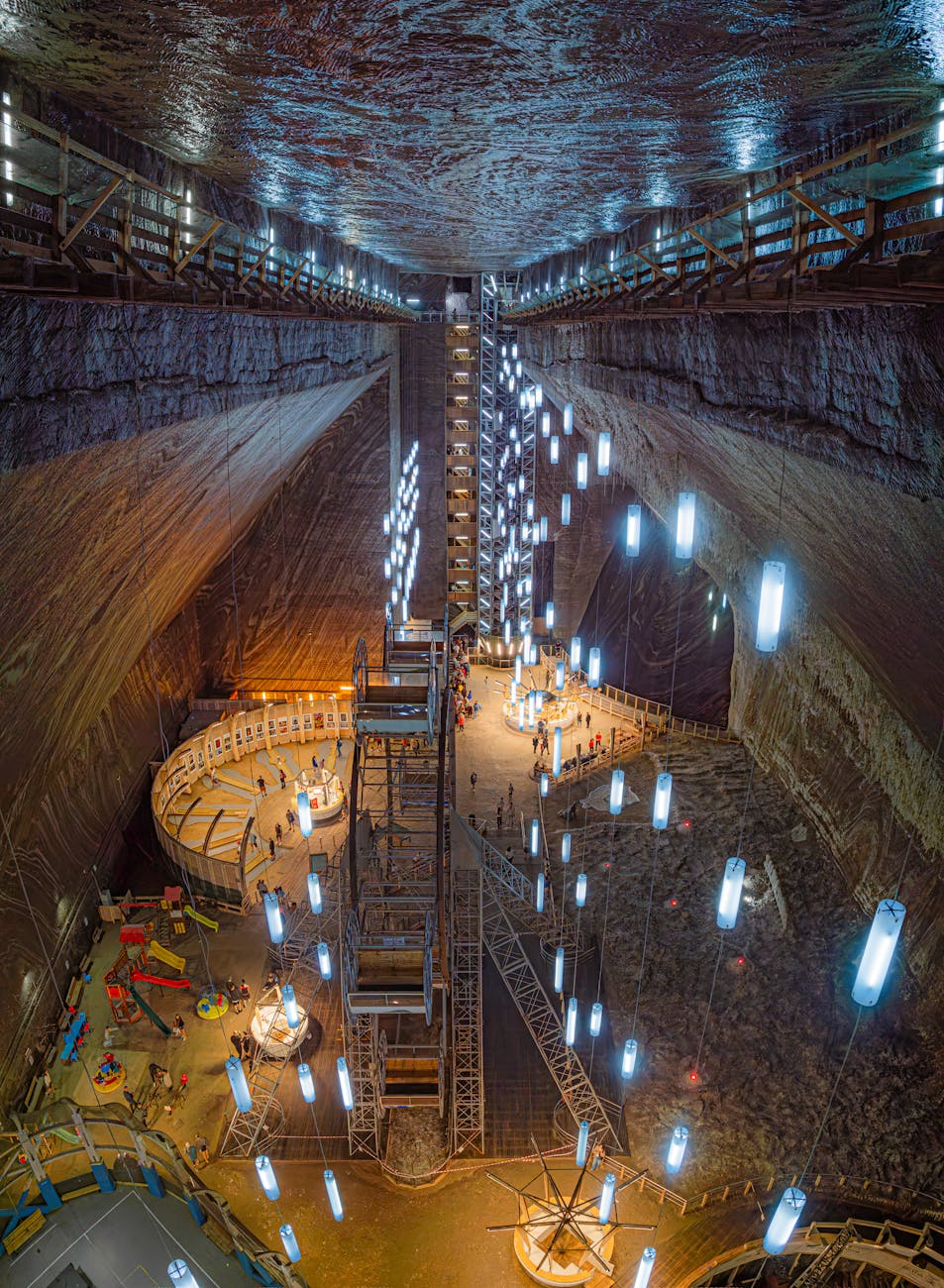
For massive, seasonal storage needs, geological formations like depleted gas fields, salt caverns, and aquifers are being explored. This approach is vital for grid stabilization and ensuring hydrogen availability for industrial hubs.
A cross-section diagram illustrating the concept of storing hydrogen in a porous underground geological formation, with injection and extraction wells.
3. Unleashing the Potential: Green Hydrogen Utilization in Industry
Green hydrogen’s versatility makes it a potent tool for decarbonizing sectors where direct electrification is challenging or impossible.
3.1. Industrial Feedstock and Process Heat
The chemical industry, particularly in ammonia and methanol production, is a prime candidate for green hydrogen adoption. Replacing grey hydrogen (produced from fossil fuels) with green hydrogen in these processes can significantly reduce emissions. Furthermore, hydrogen can be used as a clean fuel for high-temperature industrial heat in sectors like steel, cement, and glass manufacturing.

A schematic showing the process of producing green ammonia using green hydrogen and nitrogen, with renewable energy sources powering the electrolyzers.
3.2. Transportation Sector
Heavy-duty transport: Fuel cell electric vehicles (FCEVs) powered by green hydrogen offer a compelling solution for long-haul trucking and buses, providing longer ranges and faster refueling times compared to battery-electric alternatives. Maritime and Aviation: While still in early development, green hydrogen and its derivatives (like synthetic fuels or ammonia) are being explored as sustainable alternatives for shipping and aviation, two of the most challenging sectors to decarbonize.
3.3. Power Generation and Grid Balancing
Green hydrogen can be stored and converted back into electricity via fuel cells or turbines during periods of low renewable energy generation, thus acting as a critical enabler of a 100% renewable grid. It can also be blended with natural gas to reduce the carbon intensity of existing gas infrastructure, though the long-term goal is a pure hydrogen economy.
3.4. Building Heating
Hydrogen can be used for direct heating in buildings, either through dedicated hydrogen boilers or by blending with natural gas. This offers a pathway to decarbonize the heating sector, especially in regions with existing gas infrastructure.

A vibrant city skyline at dusk, with a prominent display of green hydrogen fueling stations and FCEVs interspersed with electric vehicles, symbolizing a multi-modal clean transportation ecosystem.
4. Global Decarbonization Strategies: The Role of Green Hydrogen
Governments and industries worldwide are integrating green hydrogen into their decarbonization roadmaps. This involves policy frameworks, infrastructure development, and significant investment.
4.1. Policy and Regulatory Frameworks
Supportive policies, including production subsidies, tax credits, carbon pricing mechanisms, and mandates for green hydrogen use in specific sectors, are crucial for driving down costs and stimulating market growth. International cooperation on standards and certification is also vital to ensure the integrity of the green hydrogen supply chain.
4.2. Infrastructure Development: The Hydrogen Backbone
Building a comprehensive hydrogen infrastructure – encompassing production facilities, pipelines, storage hubs, and refueling stations – requires substantial investment and strategic planning. Public-private partnerships are essential to de-risk these large-scale projects.

A world map visualization highlighting key regions with significant green hydrogen production projects, planned pipeline networks, and major industrial off-takers.
4.3. Investment and Market Growth
The global green hydrogen market is projected to experience exponential growth. Major energy companies, industrial giants, and technology startups are investing billions in research, development, and deployment of green hydrogen technologies. This investment is critical for achieving economies of scale and making green hydrogen competitive with fossil fuel alternatives.
4.4. Case Study: The European Green Hydrogen Strategy
The European Union has set ambitious targets for green hydrogen production and import, recognizing its strategic importance for energy independence and climate goals. Initiatives like the European Clean Hydrogen Alliance are fostering collaboration and investment across the value chain, aiming to deploy 10 million tons of renewable hydrogen annually by 2030.
4.5. Case Study: Australia’s Hydrogen Export Ambitions
Leveraging its abundant renewable resources, Australia is positioning itself as a major exporter of green hydrogen. Large-scale projects are underway, aiming to supply hydrogen to key Asian markets, particularly Japan and South Korea, demonstrating a globalized approach to decarbonization.

A split image: on the left, a vast solar farm in a desert landscape; on the right, a modern port with specialized ships designed for transporting liquefied hydrogen.
5. Future Outlook and Challenges
The trajectory of green hydrogen is undeniably promising, but significant hurdles remain. Cost reduction remains paramount, requiring continued technological innovation and scaling of renewable energy deployment. Public perception and safety concerns also need to be addressed through robust education and stringent safety protocols.
5.1. Technological Advancements
Continued R&D in electrolyzer efficiency, novel storage materials, and hydrogen combustion/utilization technologies will be key. The convergence of AI and quantum computing, as explored in other Vespellar Nexus reports , may unlock further breakthroughs in materials science for hydrogen storage and catalyst development, as well as optimize complex energy grid management for hydrogen integration.
5.2. Economic Viability
Achieving cost parity with fossil fuels is the ultimate goal. This will be driven by falling renewable energy costs, mass production of electrolyzers, and the development of efficient hydrogen infrastructure. Carbon pricing and supportive government policies will play a crucial role in bridging the gap in the interim.
5.3. Global Collaboration and Standards
A globally harmonized approach to hydrogen certification, safety standards, and trade agreements will be essential for unlocking the full potential of the international hydrogen economy.

A dynamic visualization of interconnected global energy networks, with glowing nodes representing green hydrogen production hubs and arrows indicating cross-border trade flows.