In the relentless march towards an autonomous future, the convergence of Cloud Robotics, Intelligent Robot Swarm Control, and Robotics-as-a-Service (RaaS) platforms represents a pivotal inflection point. As Senior Business Analyst and Writer for Google Global Search, operating within the ‘Autonomous Archive’ of Vespellar Nexus, we delve into a master manuscript designed to illuminate the profound innovation strategies poised to redefine industries and societies. This is not merely an analysis; it is a blueprint for achieving unparalleled business dominance in the age of intelligent automation.
The Vespellar Nexus posits that the future is not just automated, but intelligently orchestrated from the cloud, delivered as a service, and executed by self-organizing entities. This manuscript, curated with a futuristic, mysterious, and premium aesthetic, serves as an essential guide for global leaders navigating this complex, yet immensely promising, landscape.
The Paradigm Shift: Cloud Robotics as the Foundational Nexus
Cloud Robotics transcends the limitations of traditional, localized robotic systems by offloading heavy computational tasks, data storage, and complex AI processing to the cloud. This paradigm shift enables robots to be lighter, more agile, and significantly more intelligent, drawing insights from vast, distributed datasets and powerful cloud-based algorithms. The implications for scalability and operational flexibility are nothing short of revolutionary.
“The true power of robotics is unleashed not by isolated machines, but by interconnected entities drawing intelligence from a global, cloud-based brain. This is the Vespellar Nexus vision of autonomous evolution.”
Key Advantages of Cloud Robotics:
- Unprecedented Scalability: Easily expand or contract robotic operations without significant upfront hardware investment.
- Enhanced Computational Power: Access to supercomputing capabilities for complex AI models, machine learning, and real-time data processing, far exceeding on-board limitations.
- Centralized Data Management & Sharing: A unified repository for operational data, enabling continuous learning, predictive maintenance, and collaborative intelligence across robot fleets.
- Rapid Deployment & Updates: Software updates, new AI models, and operational parameters can be pushed to entire fleets instantaneously from a central cloud platform.
- Reduced Hardware Costs: Lighter, less powerful on-board processors are needed, lowering the unit cost of robots.
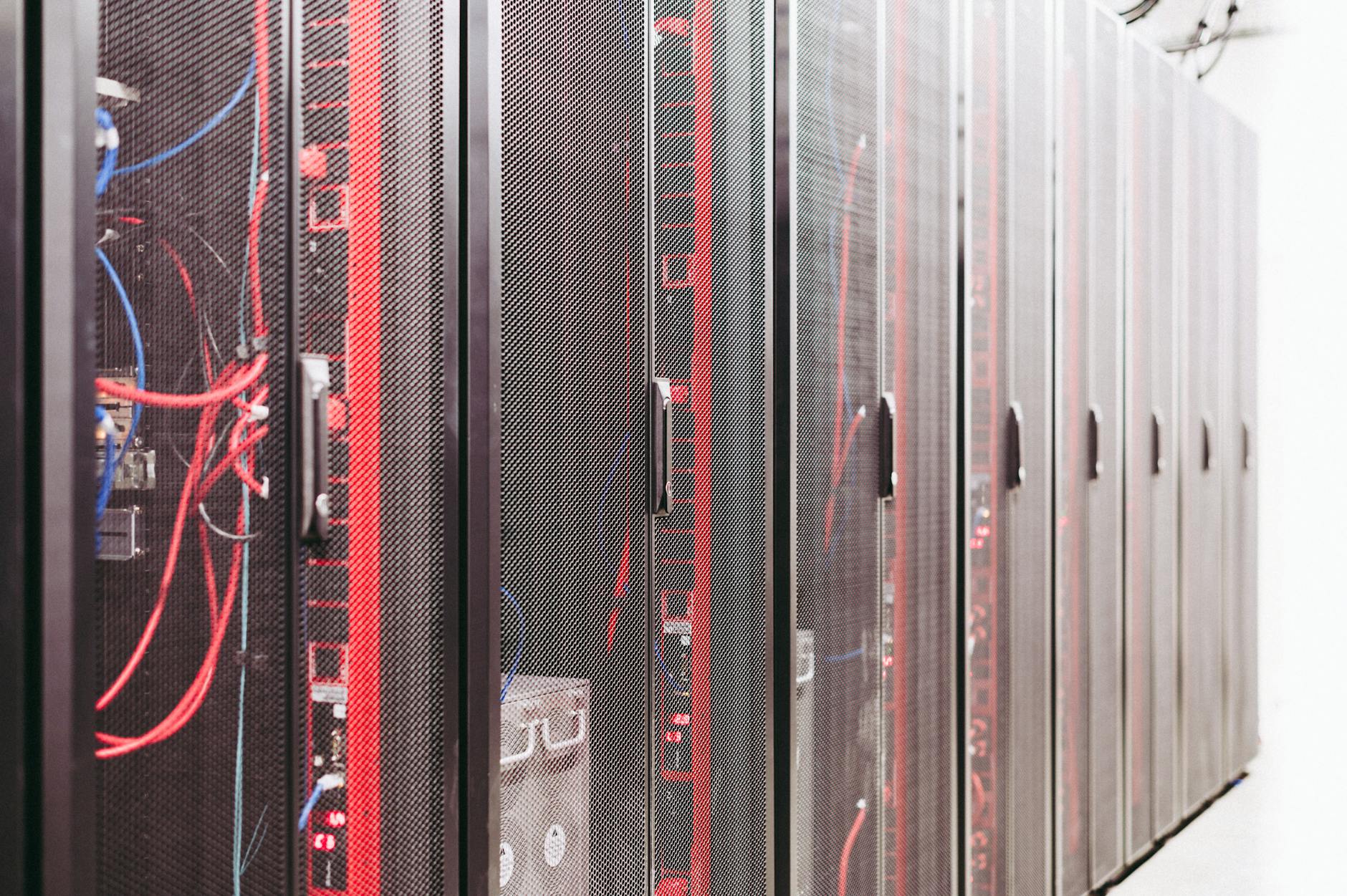
A high-angle view of a sleek, minimalist cloud data center, bathed in ethereal blue light, with abstract data streams flowing, representing the foundational infrastructure for cloud robotics.
However, the journey to full cloud robotics integration is not without its challenges. Latency in critical real-time operations, robust cybersecurity measures for distributed systems, and ensuring seamless connectivity in diverse environments remain crucial considerations. Strategic infrastructure optimization, including edge computing integration, becomes paramount to mitigate these hurdles and unlock the full potential of this foundational technology.
Intelligent Robot Swarm Control: The Symphony of Autonomy
Intelligent Robot Swarm Control represents a leap beyond individual robot automation, orchestrating multiple autonomous agents to perform complex tasks collaboratively. Inspired by biological swarm intelligence, this approach leverages decentralized control and emergent behavior to achieve resilience, efficiency, and adaptability far superior to single-robot systems.
In a Vespellar Nexus-powered swarm, each robot acts as an intelligent node, communicating with its peers and the cloud to make localized decisions that contribute to a global objective. This distributed intelligence mitigates single points of failure and allows for dynamic task allocation and reconfiguration in real-time.
Applications & Advantages of Swarm Intelligence:
- Logistics & Warehouse Automation: Optimized pathfinding, dynamic load balancing, and concurrent task execution by numerous small robots, dramatically increasing throughput.
- Precision Agriculture: Fleets of drones and ground robots can monitor crops, apply treatments, and harvest with unprecedented efficiency and minimal environmental impact.
- Exploration & Mapping: Swarms can cover vast or hazardous terrains (e.g., disaster zones, extraterrestrial environments) more quickly and thoroughly than individual robots, sharing data for comprehensive mapping.
- Disaster Response & Search and Rescue: Resilient swarms can navigate unstable environments, identify survivors, and deliver aid, even if some units are lost.
- Manufacturing & Assembly: Collaborative robots can work in concert on complex assembly lines, adapting to changes in production requirements.
A dynamic visualization of a robot swarm, dozens of small, agile robots moving in perfect synchronicity across a complex industrial environment, highlighted by glowing paths indicating intelligent coordination.
The technical underpinnings involve sophisticated communication protocols, distributed AI algorithms (such as reinforcement learning for swarm behavior), and real-time sensor fusion. The synergy with cloud robotics provides the necessary computational backbone for training these complex swarm AI models and for real-time monitoring and high-level command execution.
Robotics-as-a-Service (RaaS): Democratizing Automation
Robotics-as-a-Service (RaaS) is transforming the accessibility of advanced automation, moving robotics from a capital expenditure (CAPEX) model to an operational expenditure (OPEX) model. Businesses can subscribe to robotic capabilities, paying for the service rather than the outright purchase, maintenance, and upgrading of expensive hardware. This democratizes access to cutting-edge robotics for SMEs and large enterprises alike, fostering innovation and reducing entry barriers.
Benefits of the RaaS Model:
- Reduced Upfront Costs: Eliminates the need for significant capital investment in robot hardware and infrastructure.
- Flexibility & Scalability: Easily scale robotic operations up or down based on demand, without long-term commitments.
- Access to Latest Technology: RaaS providers ensure their fleets are equipped with the most advanced robots and AI, offering subscribers immediate access to innovation.
- Reduced Operational Burden: Maintenance, repairs, software updates, and operational support are handled by the RaaS provider.
- Predictable Costs: Subscription models offer clear and predictable budgeting for automation services.

An infographic-style image depicting the RaaS ecosystem: a cloud icon at the center, with arrows pointing to various industries (manufacturing, logistics, healthcare) and smaller robot icons, illustrating accessibility and scalability.
The global RaaS market is experiencing exponential growth, projected to reach significant valuations in the coming years. This growth is fueled by increasing labor costs, the demand for higher efficiency, and the technological advancements making robots more versatile and affordable through service models.
| Year | Projected Market Size (USD Billion) | CAGR (%) |
|---|---|---|
| 2023 | 8.5 | – |
| 2025 | 15.2 | 34.2% |
| 2028 | 38.9 | 35.0% |
| 2030 | 65.0 | 27.8% |
Synergy: Cloud Robotics, Swarm Control, and RaaS – The Innovation Nexus
The true innovation lies in the symbiotic relationship between Cloud Robotics, Intelligent Robot Swarm Control, and RaaS. This ‘Innovation Nexus’ creates a powerful, self-optimizing ecosystem where:
- Cloud Robotics provides the scalable computational backbone and data intelligence for training and managing complex swarm behaviors.
- Intelligent Swarm Control leverages this cloud intelligence to execute highly efficient, resilient, and adaptive collective tasks.
- RaaS delivers these sophisticated cloud-managed robot swarms as an accessible, cost-effective service, democratizing advanced automation.
This synergy is further amplified by advanced MLOps (Machine Learning Operations) and AI Infrastructure Optimization. As highlighted in the Vespellar blog, “Unlocking Business Dominance with Cloud-Based MLOps and AI Infrastructure Optimization for Generative AI”, efficient MLOps pipelines are critical for the continuous development, deployment, and monitoring of the AI models that power both individual robots and entire swarms. Optimizing the underlying AI infrastructure, especially in a cloud environment, ensures that these intelligent systems can operate at peak performance, handling massive data streams and complex algorithms necessary for real-time swarm coordination and decision-making.

A futuristic control room interface, displaying real-time telemetry and 3D models of robot operations, showcasing advanced swarm control algorithms and MLOps dashboards.
Strategic Imperatives for Platform Innovation
To truly dominate this evolving landscape, a multi-faceted innovation strategy is required, focusing on core technological advancements and robust operational frameworks.
1. Data-Centric MLOps and AI Infrastructure Optimization
The performance of intelligent robot swarms is directly proportional to the quality and volume of data they process and the efficiency of their AI models. A robust, cloud-based MLOps strategy is essential for:
- Automated Data Pipelines: Ingesting, cleaning, and labeling vast amounts of sensor data from robot fleets.
- Continuous Model Training & Deployment: Rapid iteration and deployment of new AI models for improved swarm behavior and task execution.
- Performance Monitoring & Explainability: Tracking robot and swarm performance, identifying anomalies, and ensuring AI decisions are transparent and auditable.
Optimizing AI infrastructure involves leveraging specialized hardware (GPUs, TPUs) in the cloud, employing serverless computing for flexible scaling, and implementing intelligent resource allocation to minimize costs and maximize throughput. This ensures the generative AI models driving future robot intelligence are trained and deployed efficiently.
2. Advanced Security & Resilience
With distributed intelligent systems, cybersecurity becomes paramount. Innovation must focus on:
- End-to-End Encryption: Securing all communication channels between robots, edge devices, and the cloud.
- Blockchain for Trust & Integrity: Potentially using distributed ledger technologies to ensure data integrity and verifiable robot actions.
- Intrusion Detection & Autonomous Response: AI-powered systems that can detect and neutralize cyber threats in real-time across the swarm.
- Redundancy & Failover Mechanisms: Designing swarm architectures that can gracefully degrade or reconfigure in case of individual robot failure or network disruption.
3. Interoperability & Standardization
A fragmented ecosystem hinders adoption. Future platforms must prioritize:
- Open APIs & SDKs: Enabling seamless integration with existing enterprise systems and fostering third-party innovation.
- Common Communication Protocols: Standardizing how robots, edge devices, and cloud platforms communicate, allowing for heterogeneous swarm deployments.
- Modular Hardware & Software Design: Facilitating easy upgrades and customization of robot capabilities.
4. Human-Robot Collaboration (HRC) & Intuitive Interfaces
The future involves humans and robots working side-by-side. Innovation should focus on:
- Natural Language Processing (NLP): Allowing intuitive voice commands and feedback for robot control.
- Augmented Reality (AR) Interfaces: Providing real-time contextual information and control overlays for human operators.
- Ethical AI for Safe Interaction: Developing AI models that understand human intent, predict actions, and prioritize safety in shared workspaces.

A conceptual image of human-robot collaboration in a smart factory, where a human worker seamlessly interacts with an autonomous robotic arm, both augmented by holographic data overlays, emphasizing safety and efficiency.
5. Edge Computing Integration for Low Latency
While the cloud provides immense computational power, certain critical tasks require near-instantaneous decision-making. Edge computing, where processing occurs closer to the data source, is vital for:
- Real-time Obstacle Avoidance: Ensuring immediate reactions to dynamic environments.
- Local Swarm Coordination: Enabling rapid, localized communication and decision-making within a subset of a swarm.
- Data Filtering & Pre-processing: Reducing the volume of data sent to the cloud, optimizing bandwidth usage.
A visual representation of edge computing in a robotics context: a small, powerful computing device at the periphery of a network, processing data from nearby robots with ultra-low latency, connected to a distant cloud.
6. Ethical AI & Governance Frameworks
As autonomous systems become more pervasive, establishing robust ethical guidelines and governance frameworks is critical:
- Transparency & Accountability: Ensuring that robot actions and AI decisions can be understood and attributed.
- Fairness & Bias Mitigation: Addressing potential biases in AI training data to prevent discriminatory outcomes.
- Privacy by Design: Implementing data privacy considerations from the outset of system development.
Case Studies & Industry Applications: A Glimpse into the Vespellar Future
| Industry Sector | Application | Innovation Impact |
|---|---|---|
| Logistics & Warehousing | Autonomous Mobile Robot (AMR) Swarms for inventory management & order fulfillment (e.g., Amazon Kiva-like systems). | 24/7 operation, 3x increase in throughput, 50% reduction in labor costs, dynamic routing optimized by cloud AI. |
| Healthcare | RaaS-based medical delivery robots for hospitals, autonomous disinfection swarms. | Reduced infection rates, faster delivery of medicines/supplies, freeing up human staff for patient care. |
| Construction | Drone swarms for site mapping & progress monitoring, robotic systems for repetitive tasks (e.g., bricklaying, welding). | Improved safety, 30% faster project completion, higher precision, reduced material waste. |
| Energy & Utilities | Inspection drone swarms for power lines, pipelines, and wind turbines. | Enhanced predictive maintenance, early detection of faults, reduced manual inspection risks, 40% cost savings. |
Future Outlook: The Autonomous Archive’s Glimpse into Tomorrow
The Vespellar Nexus anticipates a future where the current innovations are merely foundational. The ‘Autonomous Archive’ records the following trajectories:
- Hyper-Personalized RaaS: RaaS platforms will evolve to offer highly customized robot behaviors and swarm configurations on demand, tailored to minute operational nuances of individual clients.
- Self-Evolving Robot Swarms: Leveraging advanced generative AI and reinforcement learning, robot swarms will not just perform tasks but will autonomously learn, adapt, and even design new behaviors to optimize performance in unforeseen scenarios.
- Quantum Computing & AI Fusion: The integration of quantum computing will unlock unprecedented computational power for AI models, enabling the simulation of vastly more complex environments and the development of truly sentient-like swarm intelligence. As explored in “The Quantum Leap: Charting the Evolution of Next-Generation AI Models and Their Industrial Potential”, this fusion will lead to AI models capable of processing information and making decisions at speeds and complexities currently unimaginable, profoundly impacting robotics.
- Global Robotic Digital Twins: Entire robotic ecosystems will have real-time digital twins in the cloud, allowing for simulation, prediction, and optimization of operations on a planetary scale.
- Robots as Co-Creators: Beyond task execution, robots will become intelligent partners in design, innovation, and problem-solving, contributing to artistic, scientific, and engineering endeavors.
An abstract depiction of quantum computing influencing AI, with entangled qubits and neural network structures merging, symbolizing the next generation of AI models for advanced robotics.
Conclusion: Orchestrating the Autonomous Future
The strategic innovation at the intersection of Cloud Robotics, Intelligent Robot Swarm Control, and Robotics-as-a-Service is not an option; it is an imperative for any entity seeking to secure enduring business dominance. By embracing a data-centric MLOps approach, optimizing AI infrastructure, and prioritizing security, interoperability, and ethical considerations, organizations can orchestrate a future where intelligent autonomous systems deliver unprecedented efficiency, resilience, and innovation. The Vespellar Nexus stands ready to archive this transformative journey, guiding global leaders through the quantum leap into a truly autonomous and intelligently connected world. The future is not just arriving; it is being meticulously engineered, one intelligent swarm at a time, from the cloud, and delivered as a service to humanity.