The dawn of a new space age is upon us, not merely characterized by flags planted on celestial bodies, but by the intricate, sustained economic activities unfolding within Earth’s orbit and beyond. This era is defined by the burgeoning capabilities of in-orbit servicing and the transformative potential of in-space manufacturing. These technological advancements are not just incremental steps; they represent a paradigm shift, poised to unlock unprecedented economic value and redefine humanity’s relationship with the cosmos.
The Ascendancy of In-Orbit Servicing
For decades, space missions were largely one-way trips, with assets designed for a singular purpose and a finite lifespan. However, the increasing complexity and cost of space infrastructure have necessitated a move towards sustainability and longevity. In-orbit servicing (IOS) emerges as the critical enabler for this new paradigm. IOS encompasses a range of activities, including satellite refueling, repair, assembly, inspection, and de-orbiting.
Key Pillars of In-Orbit Servicing:
- Satellite Servicing: Extending the operational life of valuable satellites through refueling and component replacement. This drastically reduces the need for costly and resource-intensive satellite replacements.
- Orbital Debris Remediation: Actively removing defunct satellites and space debris that pose collision risks to active assets. This is crucial for ensuring the long-term sustainability of the space environment.
- In-Orbit Assembly: Constructing larger, more complex structures in space, such as telescopes or space stations, by assembling modular components. This overcomes the size limitations imposed by launch vehicle fairings.
- Inspection and Maintenance: Providing on-orbit diagnostics and minor repairs to ensure optimal performance and safety of space assets.
The economic implications are profound. By extending satellite lifespans, IOS significantly lowers the total cost of ownership for space-based services, from telecommunications and Earth observation to navigation and scientific research. Furthermore, the development of autonomous robotic systems, advanced grasping technologies, and sophisticated navigation algorithms are driving the evolution of IOS capabilities. Companies like Northrop Grumman’s Mission Extension Vehicle (MEV) have already demonstrated the feasibility of extending satellite life, paving the way for more complex servicing missions.

A robotic arm meticulously attaching a refueling module to a satellite in Earth’s orbit, with the planet as a backdrop.
The Manufacturing Frontier: In-Space Production
Complementing in-orbit servicing is the even more ambitious frontier of in-space manufacturing (ISM). Leveraging the unique conditions of microgravity, vacuum, and extreme temperatures, ISM promises to produce materials and components that are difficult or impossible to create on Earth. This capability has the potential to revolutionize various industries and create entirely new markets.
Transformative Applications of In-Space Manufacturing:
- Advanced Materials: Producing ultra-pure semiconductor crystals, fiber optics, and unique alloys with superior properties due to the absence of gravity-induced convection and sedimentation.
- 3D Printing and Additive Manufacturing: Fabricating complex tools, spare parts, and even structural components directly in orbit, reducing reliance on Earth-based supply chains.
- Pharmaceuticals and Biotechnology: Growing perfect protein crystals for drug development and potentially manufacturing complex biological tissues or organs for medical applications, benefiting from the controlled microgravity environment.
- On-Demand Production: Enabling the creation of bespoke items and components as needed, minimizing waste and optimizing resource utilization.
The ability to manufacture in space drastically reduces the mass that needs to be launched from Earth, a significant cost driver. It also opens up possibilities for creating infrastructure in space that can then be used to support further exploration and economic activity. For instance, the potential to manufacture large solar power arrays in orbit could provide a clean and abundant energy source for both terrestrial and space-based applications.
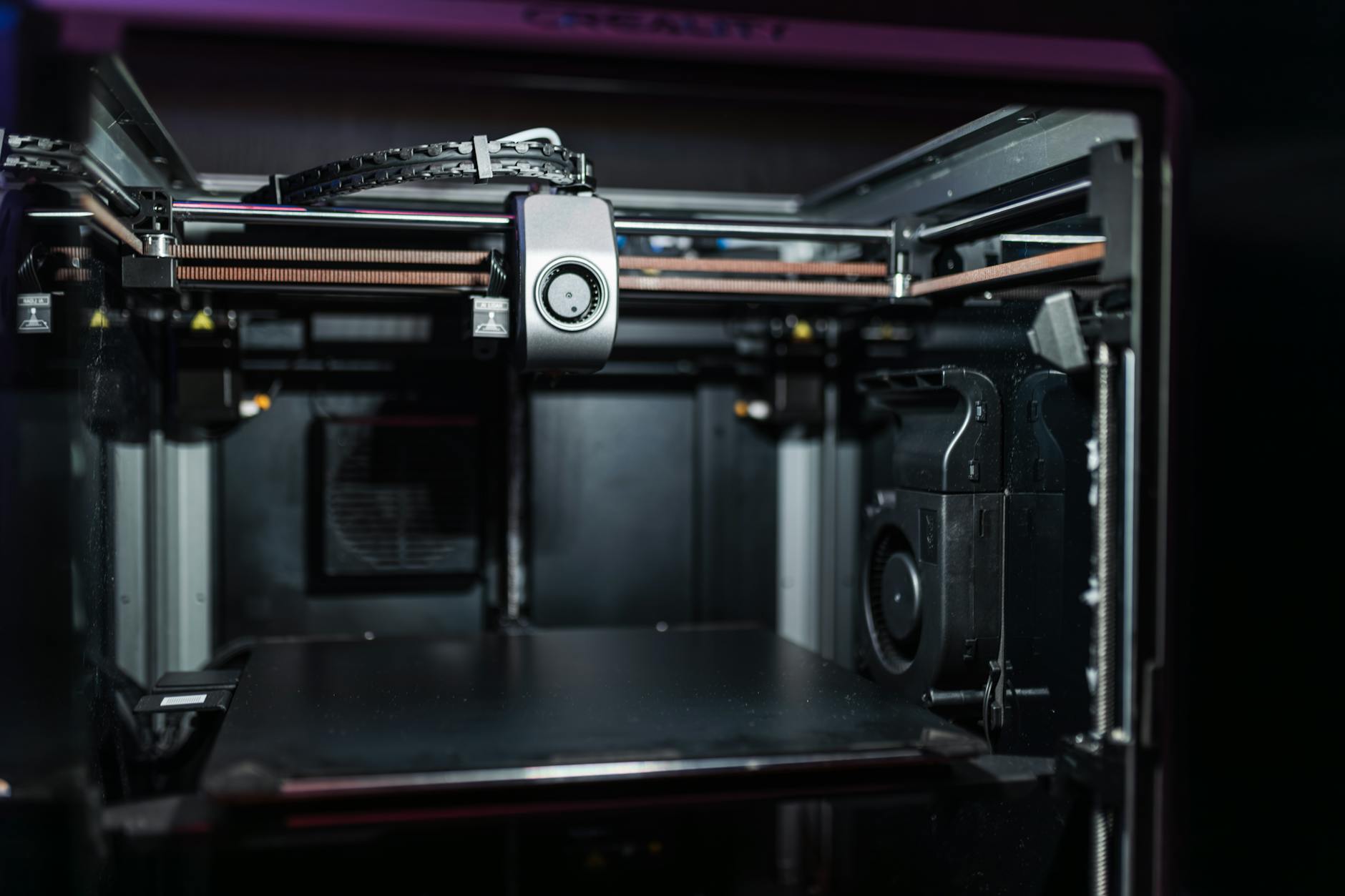
A 3D printer operating autonomously within a space station module, fabricating intricate metallic components.
Synergies and Strategic Imperatives for the Future Space Economy
The convergence of in-orbit servicing and in-space manufacturing forms the bedrock of a sustainable and thriving future space economy. These capabilities are not isolated; they are deeply interconnected and mutually reinforcing.
The Nexus: How IOS and ISM Drive Economic Growth:
- Closed-Loop Systems: IOS can provide the infrastructure and maintenance for ISM facilities, while ISM can produce the spare parts and tools needed for IOS operations, creating robust, self-sustaining ecosystems.
- Reduced Launch Costs: By enabling manufacturing in space and extending the life of existing assets, the overall demand for costly launches from Earth can be significantly reduced.
- New Market Creation: The unique products and services enabled by ISM and IOS will spawn entirely new industries and economic opportunities, from orbital manufacturing hubs to space-based resource utilization.
- Enhanced Mission Architectures: Complex missions, such as deep space exploration or large-scale space-based solar power, become more feasible with the ability to service and manufacture components in orbit.
The strategic imperatives for governments and private entities are clear. Investment in research and development for advanced robotics, AI-driven automation, novel materials science, and resilient space-based logistics is paramount. Regulatory frameworks need to evolve to support these new activities, addressing issues of orbital traffic management, debris mitigation, and intellectual property in space. Collaboration between nations and public-private partnerships will be essential to share costs, risks, and accelerate innovation.
Case Studies in Innovation
Several pioneering efforts highlight the trajectory of these advancements:
| Company/Initiative | Focus Area | Key Contribution/Potential |
|---|---|---|
| Northrop Grumman (MEV) | In-Orbit Servicing (Refueling) | Extended satellite lifespan, demonstrating economic viability of orbital servicing. |
| Made In Space (Redwire) | In-Space Manufacturing (3D Printing) | Pioneered 3D printing in space, enabling on-demand part fabrication. |
| Axiom Space | Orbital Infrastructure (Commercial Space Stations) | Developing private space stations that can serve as hubs for research, manufacturing, and servicing. |
| Orbit Fab | Orbital Servicing (Propellant Depots) | Building infrastructure for in-orbit refueling, enabling a sustainable space economy. |
A visualization of a future orbital manufacturing facility, with robotic arms assembling large structures and 3D printers in operation.
Challenges and the Road Ahead
Despite the immense promise, significant challenges remain. The harsh space environment, the high cost of space operations, the need for robust autonomous systems, and the development of international legal and ethical frameworks are all critical hurdles. Furthermore, the integration of advanced computing, such as quantum computing, will be essential for managing the complex data and autonomous operations required for a sophisticated space economy. The need for quantum-resistant cybersecurity will become paramount as critical infrastructure moves into orbit.
The development of regenerative medicine, utilizing stem cells and organoids, while seemingly distant from space activities, shares a common thread of pushing technological boundaries for unprecedented outcomes. Similarly, advancements in neurotechnology and brain-computer interfaces (BCIs) are poised to revolutionize human interaction with complex systems, a principle that will undoubtedly be applied to managing and operating intricate in-orbit systems. The strategic alignment of these cutting-edge fields with space endeavors will accelerate progress across the board. Moreover, the principles driving the decentralized energy era, with Small Modular Reactors (SMRs) and AI, offer blueprints for resilient and efficient power generation and management, essential for sustained presence in space.

A complex network diagram illustrating the interconnectedness of in-orbit servicing, in-space manufacturing, and supporting technologies like AI and advanced robotics.
Conclusion: Architecting the Orbital Economy
The evolution from mere space exploration to a robust space economy is driven by the twin engines of in-orbit servicing and in-space manufacturing. These technologies are not just enhancing our capabilities; they are fundamentally reshaping the economics and possibilities of operating beyond Earth. By fostering innovation, investing in critical infrastructure, and establishing clear strategic roadmaps, humanity is poised to unlock a new era of prosperity and advancement, built not just on Earth, but amongst the stars.

A wide shot of a futuristic orbital city, bustling with activity, connected by transport beams, with Earth visible in the distance.

Close-up of a high-tech robotic arm performing delicate repairs on a satellite component in the vacuum of space.
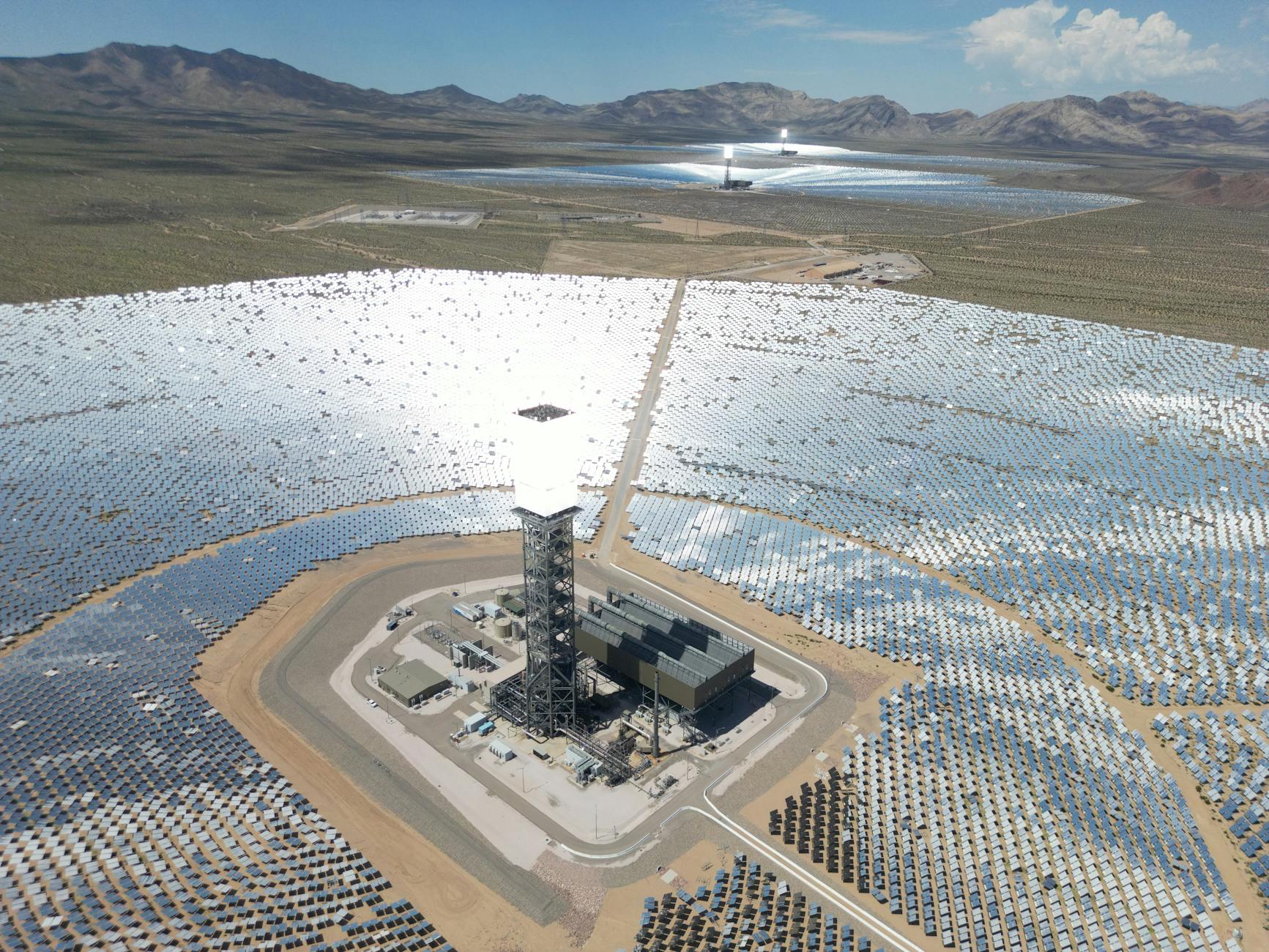
A conceptual rendering of a large-scale in-space manufacturing facility producing solar panels for orbital power generation.
An astronaut overseeing an automated construction process in orbit, highlighting human-robot collaboration.