Level 5 Autonomy: The Apex of Automotive Engineering and AI’s Grand Challenge
The pursuit of Level 5 autonomous driving represents the zenith of automotive innovation, a domain where the convergence of cutting-edge engineering, sophisticated artificial intelligence, and profound societal considerations creates a landscape of unparalleled intellectual stimulation and professional endeavor. This ultimate frontier of vehicular autonomy, characterized by the complete absence of human intervention in any driving condition, stands as a testament to human ingenuity and a harbinger of a transformed future for mobility.
The transition from lower levels of automation to Level 5 is not merely an incremental step; it is an exponential leap. Unlike Level 3, where a human driver acts as a safety net, Level 5 demands that the vehicle autonomously navigates every conceivable scenario. This necessitates AI systems capable of perception, planning, and action that are not just on par with, but superior to, human capabilities. The sheer complexity of this challenge—encompassing unpredictable urban environments, extreme weather, and the nuanced interpretation of human behavior—makes it a fertile ground for innovation and a magnet for the brightest minds in AI and automotive engineering.
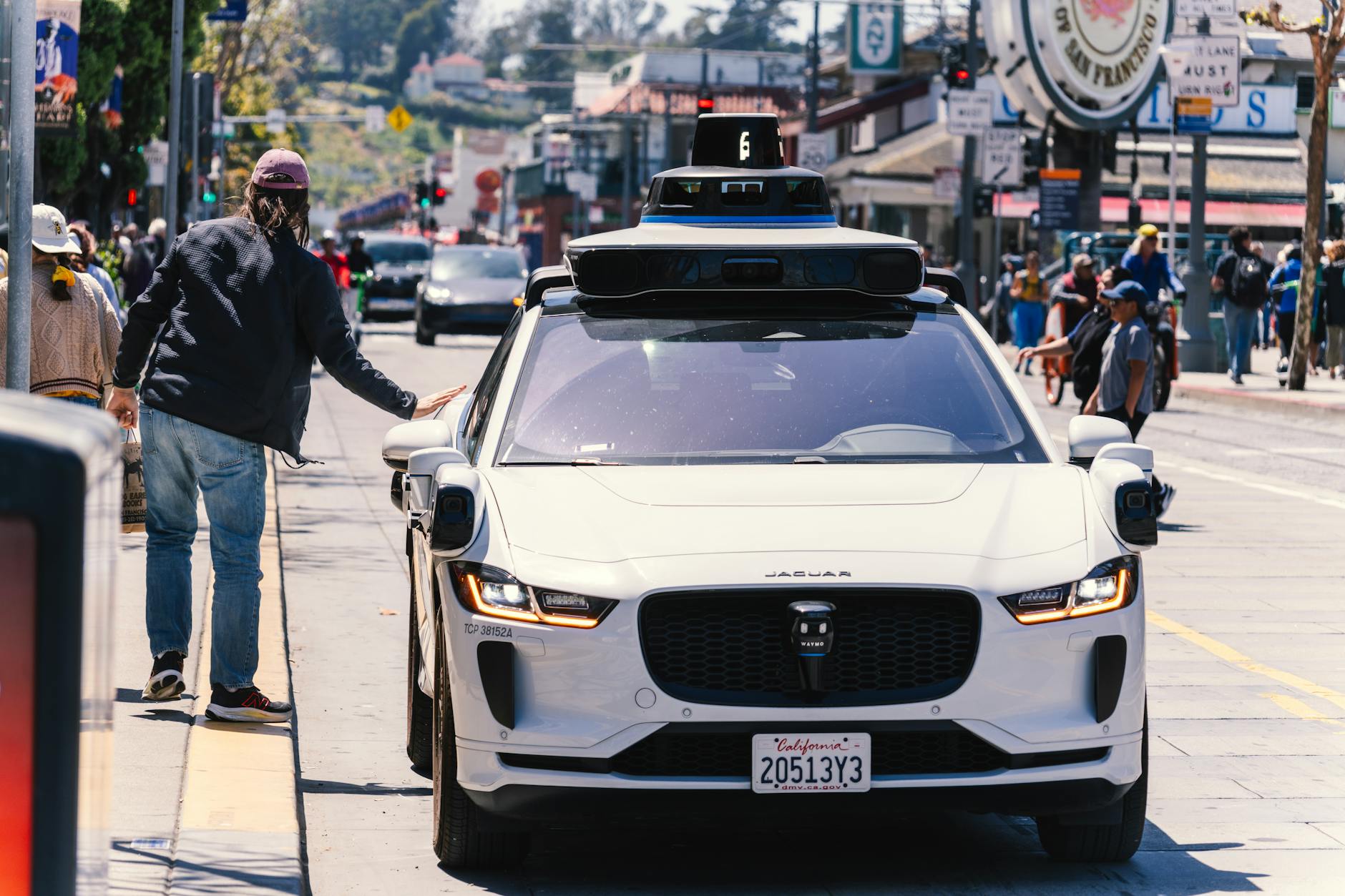
A futuristic, sleek autonomous vehicle navigating a complex urban intersection with an overlay of glowing AI data streams, symbolizing advanced perception and decision-making.
The Economic Horizon: A Market Poised for Unprecedented Growth
The economic implications of achieving Level 5 autonomy are staggering, signaling a market ripe with potential, particularly for those who can effectively capture high Cost Per Click (CPC) through targeted digital strategies. Projections for the global autonomous vehicle market are nothing short of astronomical. By 2040, this market is expected to reach a monumental $1.2 trillion. More specialized segments are also showing explosive growth: the robotaxi market alone is forecast to hit a remarkable $400 billion by 2035. The Level 5 full automation segment is predicted to surge at a compound annual growth rate (CAGR) of 24.39% through 2031.
This immense market potential is underscored by the substantial investments being made by over 40 leading companies, including tech giants and established automakers like Tesla, Waymo, Cruise, and Baidu Apollo, who are collectively pouring billions into autonomous vehicle (AV) technology. The high-value proposition of AVs—promising reduced human error, enhanced safety, and increased efficiency—naturally translates into high CPC potential for keywords associated with this transformative technology. Businesses that can effectively navigate and capitalize on this burgeoning market will find themselves at the forefront of a new industrial revolution.
| Segment | Projected Value | Forecast Year | CAGR (Approx.) |
|---|---|---|---|
| Global Autonomous Vehicle Market | $1.2 trillion | 2040 | N/A |
| Robotaxi Market | $400 billion | 2035 | N/A |
| Level 5 Full Automation | N/A | Through 2031 | 24.39% |
| Autonomous Trucks Market | $100 billion | 2030 | N/A |
Data & Technological Insights: The AI-Driven Core of Autonomy
The path to Level 5 autonomy is paved with intricate technological challenges, where artificial intelligence serves as the linchpin for overcoming these hurdles. The ‘long tail’ of edge cases—rare, unpredictable scenarios—presents a formidable obstacle, as does ensuring reliable performance in extreme weather conditions and making accurate predictions under uncertainty. The sheer volume of potential driving scenarios makes exhaustive testing virtually impossible with traditional methods.
The Indispensable Role of AI
AI is not merely a component of autonomous driving; it is its very essence. Deep learning, in particular, is poised to have the most significant impact, enabling vehicles to learn from vast datasets without constant human intervention. AI algorithms process real-time data from an array of sensors—LiDAR, cameras, radar—to make critical driving decisions.
Generative AI is emerging as a game-changer, with companies like Waymo and Tesla integrating its capabilities to create more robust and adaptable autonomous systems. This technology can generate realistic and diverse scenarios for testing and validation, significantly reducing the reliance on costly and time-consuming real-world data collection. By creating synthetic datasets, generative AI helps train AV models to recognize edge cases more effectively and improves the overall robustness and generalization of the systems.

A visualization of AI processing sensor data from a self-driving car, showing elements like object detection, path planning, and decision-making in real-time.
Ensuring Unwavering Safety: Validation and Verification (V&V)
The paramount concern in the journey toward Level 5 autonomy is safety. Rigorous safety validation and verification (V&V) are non-negotiable, employing a multi-layered strategy that combines simulation, real-world testing, and formal verification. Simulation-based testing allows AVs to be exposed to millions of virtual scenarios—including realistic road conditions, severe weather, and unexpected obstacles—that would be impractical or dangerous to replicate in reality.
Existing standards, such as ISO 21448 (Safety of the Intended Functionality – SOTIF) and the ISO 34502 Series, provide frameworks for AI-driven safety through scenario-based testing, behavioral safety modeling, and AI lifecycle management. Companies like NVIDIA are at the forefront of this effort, offering comprehensive full-stack safety systems, such as NVIDIA Halos, which integrate hardware, software, and processes to ensure system-level stability and continuous improvement. These systems are built on a foundation of rigorous safety engineering, incorporating safety-assessed SoCs, safety-certified operating systems, and advanced simulation environments like NVIDIA Omniverse and Cosmos.
| Technology | Role in Level 5 Autonomy | Key Benefits |
|---|---|---|
| Deep Learning | Perception, planning, and decision-making | Enables learning from vast datasets, real-time analysis |
| Generative AI | Scenario generation for testing, synthetic data creation | Accelerates development, improves edge case handling, reduces testing costs |
| Sensor Fusion | Integrating data from multiple sensors (LiDAR, radar, cameras) | Enhances environmental perception, improves reliability and safety |
| Computer Vision | Interpreting visual data from cameras | Object recognition, lane detection, traffic sign reading |
Innovative Business Trends: Reshaping Industries and Mobility
The advent of Level 5 autonomy promises to be a profound catalyst for industrial transformation. Logistics is set for a revolution, with autonomous trucks projected to command a $100 billion market by 2030. Ride-hailing services will be reshaped by expanding robotaxi fleets, offering new models of on-demand mobility. New service paradigms, such as Robotics as a Service (RaaS), are emerging, alongside a growing reliance on data-driven insights to optimize operations and enhance user experiences.
Governments worldwide are actively engaged in establishing regulatory frameworks and fostering innovation through strategic roadmaps and initiatives. These regulatory efforts are crucial for ensuring public safety, building consumer trust, and creating a conducive environment for the widespread adoption of autonomous vehicles. The harmonization of international standards, such as those being developed by the UN Working Party on Automated/Autonomous and Connected Vehicles (WP.29), is vital for global deployment.
A montage of diverse applications of Level 5 autonomy: a long-haul autonomous truck on a highway, a robotaxi in a bustling city, and a delivery bot navigating a suburban street.
Differentiation: A Focused Exploration of Ground Autonomy
While discussions around autonomous technology often span various domains, this analysis zeroes in on the unique complexities of ground-based Level 5 autonomous driving. Unlike aerial mobility, ground autonomy grapples with a distinct set of challenges, including the unpredictable nature of diverse road users, the intricacies of dense urban environments, and the critical issue of liability in accident scenarios. This contrasts with previous explorations of autonomous flight or space robotics, grounding this discussion in the specific realities of terrestrial transportation.
The focus here is not merely on the technological feasibility but on the intricate commercialization hurdles and the AI-driven strategies essential for ensuring safety verification. The inherent unpredictability of roads, the seamless integration of various AI systems, and the rigorous validation processes required for human-level driving performance are the core differentiating factors that define the pursuit of Level 5 autonomy on the ground.

A split image showing the complexity of urban ground traffic on one side and a serene, futuristic highway with autonomous vehicles on the other, highlighting the range of operational domains.
Conclusion: The Road to Level 5—A Journey of Audacious Innovation
Level 5 autonomous driving is more than a technological aspiration; it is a grand challenge that is pushing the boundaries of AI, engineering, and human-computer interaction. The intellectual curiosity it sparks, the professional opportunities it creates, and the potential to revolutionize transportation are immense. While the road ahead is undoubtedly complex, marked by significant technical, regulatory, and societal hurdles, the relentless pursuit of this ultimate goal is transforming our world, promising a future of unparalleled safety, efficiency, and mobility for all.

A symbolic image of a road stretching towards a distant, futuristic city skyline, with an autonomous vehicle at the forefront, representing the journey and destination of Level 5 autonomy.

A close-up of a sophisticated sensor array on an autonomous vehicle, highlighting the intricate technology required for advanced perception.

A graphic illustrating the concept of ‘edge cases’ in autonomous driving, showing various unusual scenarios that Level 5 vehicles must handle.