AI-Powered In-Situ Resource Utilization (ISRU): Architecting the Future of Deep Space Exploration and Economic Expansion
The final frontier, once a realm of human intrepidity and scientific curiosity, is rapidly transforming into a burgeoning economic ecosystem. At the vanguard of this metamorphosis is Artificial Intelligence (AI), not merely as a tool for analysis but as a fundamental enabler of deep space exploration and the ambitious expansion of the space economy. Central to this paradigm shift is the concept of In-Situ Resource Utilization (ISRU) – the capability to leverage extraterrestrial resources for mission sustenance and operational growth. AI is not just augmenting ISRU; it is fundamentally architecting its future, paving the way for sustainable human presence beyond Earth and unlocking unprecedented economic opportunities.
The sheer scale of deep space exploration and the establishment of off-world outposts necessitate a departure from Earth-centric logistics. Transporting all necessary materials – water, oxygen, fuel, building components – is prohibitively expensive and logistically challenging. ISRU offers a revolutionary solution by utilizing local resources, such as water ice on the Moon and Mars for propellant and life support, or regolith for construction. However, the effective implementation of ISRU is a complex undertaking, demanding precise resource identification, efficient extraction, sophisticated processing, and intelligent management in environments that are often remote, hazardous, and subject to significant communication delays. This is precisely where AI emerges as an indispensable partner.

A futuristic AI-driven robotic arm delicately extracting water ice from the lunar surface, with Earth visible in the distant sky.
The AI-Driven Revolution in ISRU: From Prospecting to Production
AI’s influence on ISRU spans the entire value chain, from initial resource prospecting to final product manufacturing. Machine learning algorithms are adept at analyzing vast datasets from orbital sensors, telescopes, and probes to identify potential resource-rich sites with remarkable accuracy. NASA’s Moon Mineral Mapper (M³) missions, for instance, utilize AI for spectral clustering to analyze hyperspectral data, effectively mapping mineral distributions across the lunar surface. Similarly, AI can process astronomical data to discover and characterize asteroids and other celestial bodies for potential mining operations, identifying those rich in precious metals, water, and other vital elements.
In the realm of resource extraction, AI-powered autonomous spacecraft and rovers are being developed to perform complex tasks without direct human intervention. These AI-driven systems can navigate hazardous terrains, operate drills, and manage extraction processes with precision, minimizing risks to human life and enabling operations in environments previously deemed too dangerous. For example, AI is instrumental in optimizing the extraction and processing of resources on the Moon and Mars, analyzing geological data to pinpoint mineral deposits and signs of past water activity.
Furthermore, AI is pivotal in the in-situ manufacturing of essential components and structures. Orbital factories, powered by AI, are envisioned to utilize mined materials for 3D printing of parts, tools, and even habitats. This not only reduces the reliance on Earth-based supply chains but also opens up possibilities for creating structures that are impossible to manufacture under Earth’s gravity. AI algorithms can optimize material selection, control printing processes in real-time, and ensure quality control, adapting to the unique conditions of space.
| Stage | AI Application | Description |
|---|---|---|
| Prospecting & Exploration | Data Analysis & Site Identification | AI algorithms analyze satellite imagery, hyperspectral data, and telescopic observations to locate and characterize potential resource deposits (e.g., water ice, metals, Helium-3). |
| Extraction | Autonomous Robotics & Process Optimization | AI-powered robots and rovers conduct mining operations, navigate hazardous environments, and optimize extraction techniques in real-time. |
| Processing & Manufacturing | In-Situ Production & 3D Printing | AI controls orbital factories for manufacturing components, building materials, and producing propellant from local resources, reducing reliance on Earth supplies. |
| Resource Management | Life Support & Logistics Optimization | AI optimizes the use of ISRU-derived resources for life support systems, manages supply chains, and predicts maintenance needs for continuous operation. |
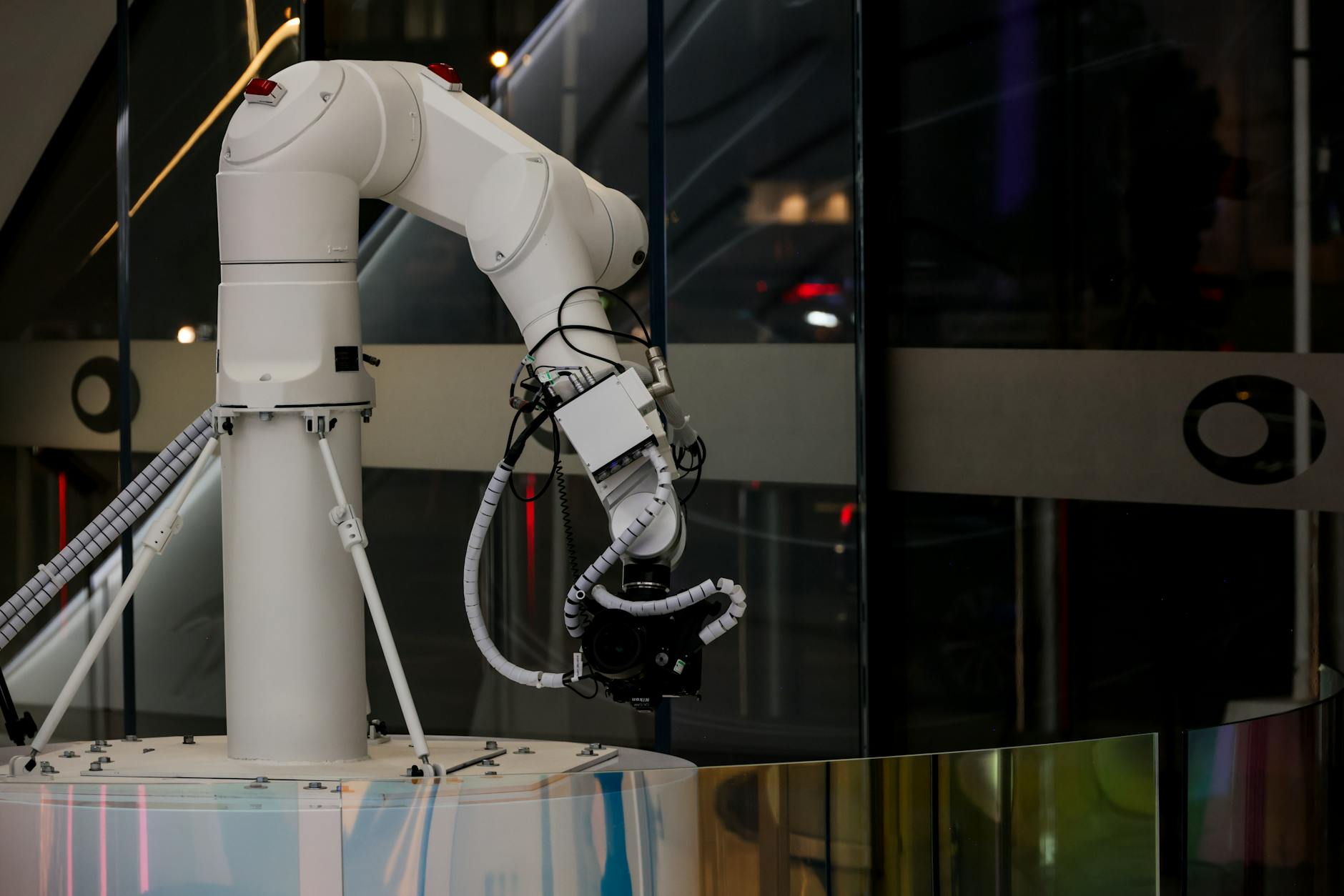
A schematic of an orbital factory where robotic arms are 3D printing a habitat module using processed lunar regolith.
Deep Space Exploration: AI as the Navigator and Guardian
Beyond ISRU, AI is fundamentally reshaping the landscape of deep space exploration. Autonomous navigation systems, powered by AI, enable spacecraft and rovers to make real-time decisions, perform complex maneuvers, and explore environments with significant communication delays from Earth. NASA’s Perseverance rover on Mars, for instance, utilizes AI for autonomous driving, identifying hazards and navigating terrain independently. This level of autonomy is crucial for missions venturing to the Moon, Mars, and beyond, where human intervention is often impractical or impossible.
AI also plays a critical role in scientific discovery and data analysis. Astronomers use AI to process immense volumes of data from telescopes, identifying patterns, anomalies, and potential exoplanets with unprecedented speed and accuracy. NASA’s ExoMiner deep learning system, for example, has identified hundreds of new exoplanets by analyzing Kepler Telescope data. In deep space missions, AI can prioritize scientific measurements, manage limited contact windows with Earth, and enable coordinated behavior across multiple assets, thereby expanding our understanding of the universe.
Furthermore, AI is enhancing spacecraft design and operational efficiency. Generative AI can optimize engineering designs, simulate potential equipment failures, and even aid in the development of new materials tailored for the extreme conditions of space. This leads to more robust, lighter, and cost-effective spacecraft, accelerating innovation and reducing mission risks.
A visualization of an AI analyzing vast amounts of astronomical data, highlighting potential exoplanets.
Expanding the Space Economy: AI as the Engine of Growth
The economic potential of AI in space is staggering. The global space economy, already valued at hundreds of billions of dollars, is projected to reach trillions in the coming decades. AI is the primary catalyst for this exponential growth. Its ability to reduce operational costs, increase efficiency, and enable new services is fundamental to unlocking this potential.
Space mining, once a concept relegated to science fiction, is rapidly becoming a tangible reality, driven by AI. From prospecting for rare minerals on asteroids and the Moon to extracting and processing these resources, AI-powered systems are making space mining feasible and efficient. The resources extracted can not only fuel further space exploration and sustain off-world settlements but also provide valuable materials for Earth-based industries, creating a truly circular space economy.
AI is also revolutionizing orbital manufacturing and services. The development of AI-powered orbital factories allows for the production of complex components, satellites, and even large structures in space, leveraging the unique advantages of microgravity and vacuum. This capability reduces the cost and complexity of space missions and enables the creation of advanced technologies and infrastructure that were previously impossible.
Moreover, AI is crucial for managing the burgeoning challenges of space debris. By accurately tracking, predicting collisions, and guiding autonomous debris removal systems, AI contributes to ensuring the long-term sustainability of space activities. A cleaner orbital environment is essential for the continued growth and safety of the space economy.
| Sector | AI-Driven Advancements | Economic Implications |
|---|---|---|
| Space Mining | Autonomous prospecting, extraction, and processing of extraterrestrial resources. | Enables sustainable off-world presence, provides raw materials for Earth and space, fuels new industries. |
| Orbital Manufacturing | AI-guided robotic assembly, 3D printing, and material processing in space. | Reduces launch costs, enables creation of large structures, fosters new space-based industries. |
| Space Traffic Management | AI-powered tracking, collision avoidance, and debris removal. | Ensures safety and sustainability of space operations, protects assets, reduces insurance costs. |
| Satellite Operations | Automated anomaly detection, predictive maintenance, network optimization. | Increases efficiency, reduces operational costs, extends satellite lifespan, enables mega-constellations. |

A futuristic cityscape on Mars, with AI-controlled construction robots building habitats and infrastructure.
The Path Forward: Challenges and Opportunities
While the trajectory of AI in space exploration and economy expansion is undeniably upward, significant challenges remain. Ensuring the ethical development and deployment of AI, addressing cybersecurity threats in increasingly interconnected space systems, and establishing robust governance frameworks are paramount. The sheer volume of data generated by space missions necessitates advanced AI capabilities for processing and deriving actionable insights, often at the edge, directly on spacecraft, to overcome communication latency.
The development of AI-powered ISRU and advanced manufacturing in space will require unprecedented international collaboration and private sector investment. As we continue to push the boundaries of human exploration, AI will not merely be a supporting technology; it will be an integral partner, enabling us to overcome the inherent challenges of space and unlock its vast economic and scientific potential. The future of deep space exploration and a thriving space economy is inextricably linked to the continued advancement and responsible integration of artificial intelligence.
A diverse team of scientists and engineers collaborating around a holographic display showing a complex AI model for lunar resource extraction.
“AI is not just augmenting our capabilities in space; it is fundamentally redefining what is possible. From autonomous resource utilization to intelligent navigation and the creation of entirely new economies, AI is the architect of humanity’s multi-planetary future.”
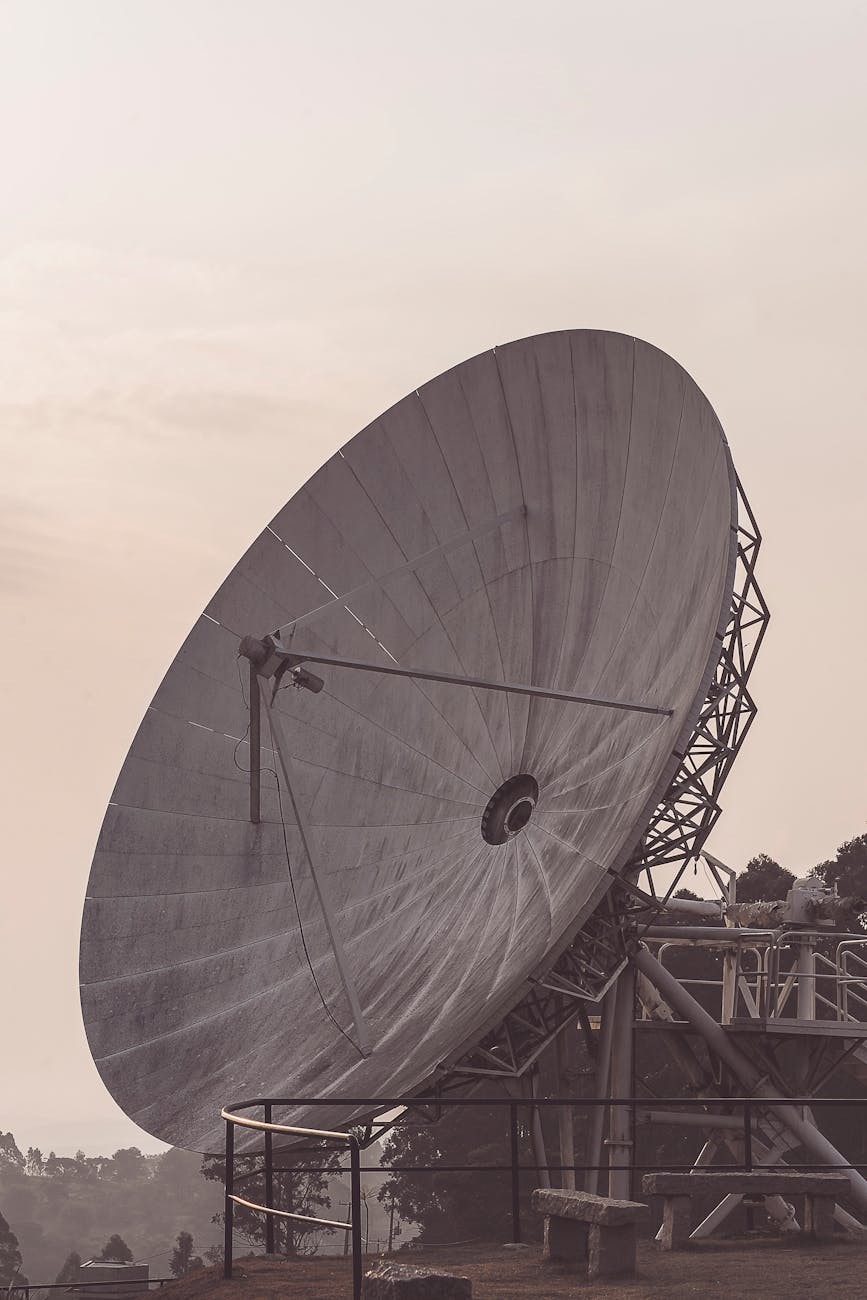
A breathtaking view of Earth from orbit, with a network of interconnected satellites hinting at a sophisticated space infrastructure.

An AI-generated artistic rendition of a self-sustaining lunar base, showcasing advanced ISRU systems and robotic operations.