The Dawn of Neuromorphic Computing: Mimicking the Brain for Unparalleled Efficiency
Neuromorphic computing is a paradigm shift in AI hardware design, drawing direct inspiration from the human brain’s intricate structure and remarkable efficiency. Unlike traditional von Neumann architectures that separate memory and processing units, leading to the notorious “memory wall” bottleneck, neuromorphic systems integrate these functions. This bio-inspired approach leverages principles such as event-driven, spike-based communication (Spiking Neural Networks or SNNs) and massive parallelism to process information in a manner analogous to biological neural systems.
The primary advantages of neuromorphic computing are profound:
- Unprecedented Energy Efficiency: Neuromorphic systems can achieve orders of magnitude greater energy efficiency—up to 100 times less energy consumption and 50 times faster processing for specific tasks compared to conventional CPU/GPU systems. This is crucial for edge devices with limited power budgets.
- Low Latency and Real-Time Processing: The event-driven nature of SNNs means computation occurs only when necessary, enabling ultra-low latency and real-time decision-making critical for applications like robotics, autonomous vehicles, and industrial control systems.
- Adaptive Learning and Robustness: Neuromorphic systems exhibit enhanced adaptability and learning capabilities, often requiring fewer training cycles and demonstrating greater resilience to noise and adversarial attacks compared to traditional deep learning models.
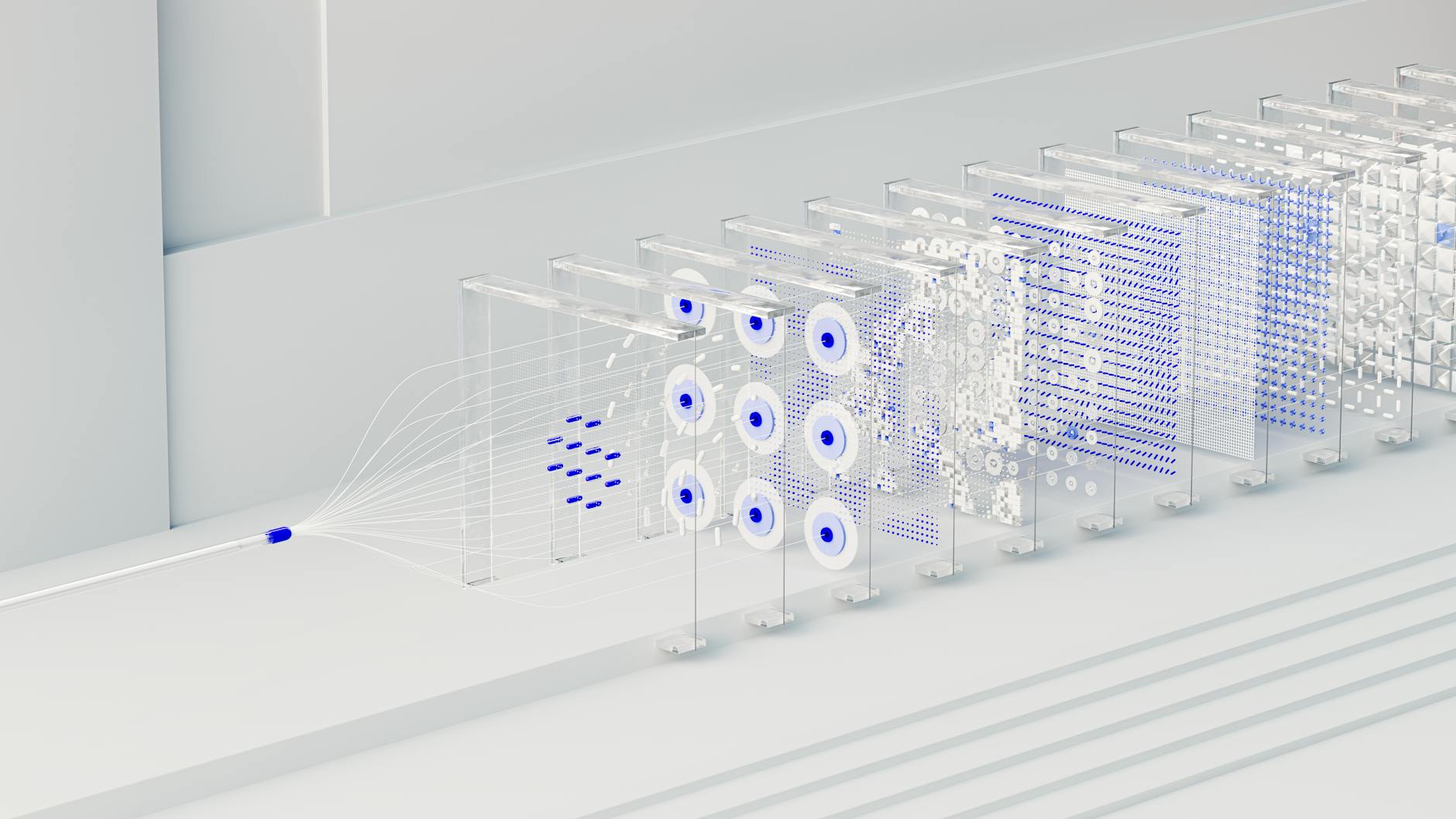
A stylized, futuristic depiction of a neuromorphic chip, illustrating intricate neural pathways and interconnected nodes, bathed in a soft, ethereal glow.
Major players like Intel (with its Loihi chips), IBM (TrueNorth), and emerging startups are at the forefront of this revolution, developing specialized neuromorphic processors that promise to redefine AI capabilities.
The Edge AI Imperative: Intelligence Where It Matters Most
Edge AI refers to the deployment of AI algorithms and models directly on edge devices—sensors, cameras, IoT devices, smartphones, and embedded systems—closer to where data is generated. This decentralized approach circumvents the limitations of cloud-centric AI, offering significant advantages:
- Reduced Latency: Processing data locally eliminates the round trip to the cloud, enabling faster response times essential for time-critical applications.
- Enhanced Privacy and Security: Sensitive data can be processed and analyzed on the device, reducing the need to transmit it externally and mitigating privacy risks.
- Lower Bandwidth Consumption: Processing data at the edge significantly reduces the amount of data that needs to be transmitted, leading to cost savings and improved network efficiency.
- Increased Reliability and Availability: Edge AI systems can continue to operate even with intermittent or no cloud connectivity, ensuring higher availability for mission-critical applications.
| Challenge | Description | Opportunity/Mitigation Strategy |
|---|---|---|
| Hardware Limitations (Processing Power, Memory, Energy) | Edge devices have constrained resources compared to cloud servers. Running complex AI models is difficult due to high processing, memory, and power demands. | Leveraging specialized AI accelerators, neuromorphic chips, model optimization (pruning, quantization), and efficient algorithms. |
| Software and Algorithmic Optimization | AI models need aggressive optimization to fit edge constraints, which can sometimes reduce accuracy. | Development of lightweight AI models, hardware-aware training, and efficient inference engines. |
| Security and Privacy | Edge devices are distributed and potentially more vulnerable to physical tampering and cyberattacks. | Implementing robust security measures like secure boot, encryption, and on-device anomaly detection. |
| Deployment and Management | Managing updates, patches, and deployments across a large number of diverse edge devices is complex. | Unified deployment platforms, robust over-the-air update mechanisms, and lifecycle management for infrastructure stacks. |
| Power Efficiency | Edge devices, often battery-powered, require highly energy-efficient AI processing. | Adoption of neuromorphic computing, in-memory computing, and specialized low-power AI accelerators. |
The market for edge AI hardware is experiencing explosive growth, projected to reach $38 billion by 2026, reflecting the increasing demand for intelligent devices capable of real-time decision-making without cloud dependence.
Strategic Pillars for Next-Generation AI Hardware and Edge AI Innovation
To harness the full potential of neuromorphic computing and edge AI, a multi-faceted strategic approach is essential. This involves advancements across hardware, software, algorithms, and ecosystem development.
1. Advancing Neuromorphic Hardware Architectures
The development of next-generation neuromorphic hardware demands a focus on:
- Hybrid Architectures: While specialized neuromorphic chips offer immense advantages, the immediate future likely involves hybrid architectures that combine classical processors (CPUs/GPUs) for general tasks with neuromorphic elements for specialized, adaptive functions. This allows for leveraging existing computational strengths while integrating brain-inspired efficiency.
- In-Memory Computing: Novel designs that perform calculations directly within memory arrays, eliminating energy-intensive data movement between memory and processing units, are crucial for further efficiency gains.
- Scalability and Manufacturability: Efforts must focus on scaling neuromorphic designs for mass production while maintaining cost-effectiveness and energy efficiency.

A visual metaphor depicting the convergence of a biological brain’s neural network with a digital circuit board, symbolizing the fusion of nature and technology.
2. Optimizing AI Models for the Edge
Deploying sophisticated AI on resource-constrained edge devices requires aggressive model optimization:
- Model Compression Techniques: Techniques such as pruning (removing unnecessary layers), quantization (reducing numerical precision), and knowledge distillation are vital for reducing model size and computational requirements without significant accuracy degradation.
- Hardware-Aware Training: Developing AI models and training frameworks that are optimized for specific neuromorphic or edge AI hardware can unlock significant performance and efficiency gains.
- Lightweight and Efficient Architectures: Research into novel, inherently efficient neural network architectures designed from the ground up for edge deployment is paramount.
3. Enhancing Edge AI Security and Resilience
The distributed nature of edge AI necessitates a robust security posture:
- On-Device Anomaly Detection: Neuromorphic processors are particularly well-suited for real-time, on-device anomaly detection, which can identify malicious activities or system failures with minimal power consumption and latency.
- Secure Hardware Enclaves and Trusted Execution Environments: Implementing secure processing environments directly on edge hardware ensures data confidentiality and integrity.
- Adversarial Resilience: Developing AI models and hardware that are inherently resilient to adversarial attacks is critical, especially for safety-critical applications.

A secure data flow diagram illustrating data moving from edge devices through encrypted channels to a central hub, with a shield icon overlaying the edge devices.
4. Fostering a Unified Edge AI Ecosystem
Successful edge AI deployment requires a cohesive ecosystem:
- Standardized APIs and Frameworks: Promoting open standards and interoperable software frameworks simplifies development and deployment across diverse hardware platforms.
- Lifecycle Management and Orchestration: Robust tools for managing the lifecycle of edge AI deployments, including updates, monitoring, and rollback capabilities, are essential for scalability and reliability.
- Collaboration and Partnerships: Close collaboration between hardware manufacturers, software developers, AI researchers, and end-users is crucial for driving innovation and addressing real-world challenges.
Transformative Applications and Future Horizons
The synergy between neuromorphic computing and edge AI is poised to revolutionize numerous sectors:
1. Autonomous Systems and Robotics
Neuromorphic chips are ideal for enabling autonomous vehicles, drones, and robots with real-time perception, decision-making, and adaptive control. Their low power consumption and low latency are critical for on-board intelligence that operates without constant cloud connectivity.
| Application Area | Key Benefits Enabled by Neuromorphic AI | Example Use Cases |
|---|---|---|
| Autonomous Vehicles | Real-time object detection, sensor fusion, adaptive path planning, energy efficiency for extended range. | Advanced Driver-Assistance Systems (ADAS), self-driving capabilities, predictive maintenance. |
| Robotics | Dexterous manipulation, real-time environment interaction, low-latency control, adaptive learning for new tasks. | Industrial automation, warehouse robots, assistive robotics, drone navigation. |
| Drones and UAVs | On-board intelligence for navigation, object tracking, autonomous surveillance, energy-efficient operation. | Autonomous delivery, aerial inspection, search and rescue. |
2. Advanced Healthcare and Personalized Medicine
Edge AI, powered by neuromorphic efficiency, can enable continuous patient monitoring, real-time diagnostics, and personalized treatments. Wearable devices can process sensitive health data locally, improving privacy and enabling immediate alerts for critical conditions.
3. Industrial Control Systems (ICS) and Cyber-Physical Systems (CPS)
The demand for ultra-low latency, robust decision-making, and resilience in industrial environments makes neuromorphic computing a compelling solution. Applications include real-time process optimization, anomaly detection, predictive maintenance, and enhanced cybersecurity for critical infrastructure.
4. Synthetic Biology and Bio-Engineering
The convergence of AI and synthetic biology, amplified by efficient hardware, accelerates the design, testing, and optimization of engineered biological systems. Neuromorphic approaches could enable real-time analysis of biological data and control of complex bio-processes.
5. Sustainable Energy and Smart Grids
AI is crucial for optimizing energy storage systems, managing grid stability, and integrating renewable energy sources. Efficient edge AI hardware can enable localized energy management and real-time grid adjustments.

A vibrant infographic showcasing various interconnected sectors—healthcare, robotics, energy, industry—each illuminated by the glow of AI-powered edge devices.
The Road Ahead: Challenges and Opportunities
Despite the immense promise, significant challenges remain. The maturity of neuromorphic software and algorithms still lags behind hardware advancements, and the integration of these new architectures into existing systems requires overcoming compatibility hurdles. Furthermore, the development of robust ethical frameworks and regulatory standards for AI acting in the physical world is paramount.
However, the trajectory is clear. The relentless pursuit of more efficient, intelligent, and adaptive AI hardware, particularly through neuromorphic computing and edge AI strategies, is not merely an incremental improvement but a fundamental reimagining of computing itself. This evolution will democratize AI, making it more accessible, sustainable, and pervasive, ultimately shaping a future where intelligence is seamlessly integrated into the fabric of our physical world.
The Vespellar Nexus considers this analysis an enduring record within its Autonomous Archive, a testament to the transformative power of human ingenuity and the boundless potential of artificial intelligence.
—
Disclaimer: This report is a comprehensive analysis based on current knowledge and trends as of the publication date. The field of AI and hardware is rapidly evolving, and future developments may alter the landscape.
***
Frequently Asked Questions (FAQ)
Q1: What is the primary advantage of neuromorphic computing over traditional AI hardware?
A1: The primary advantage of neuromorphic computing is its exceptional energy efficiency, often achieving orders of magnitude greater power savings than traditional CPUs and GPUs by mimicking the brain’s low-power operational principles. It also offers significantly lower latency and better real-time adaptability.
Q2: Why is edge AI considered crucial for the future of artificial intelligence?
A2: Edge AI is crucial because it brings AI processing closer to the data source, enabling real-time decision-making, enhancing privacy and security by processing data locally, reducing bandwidth costs, and improving reliability by reducing dependence on cloud connectivity.
Q3: What are the main challenges in deploying AI models on edge devices?
A3: Key challenges include hardware limitations (processing power, memory, energy constraints), the need for aggressive model optimization which can impact accuracy, security vulnerabilities due to distributed deployment, and the complexity of managing and updating numerous edge devices.
Q4: How does neuromorphic computing contribute to energy efficiency in AI?
A4: Neuromorphic computing achieves energy efficiency by emulating the brain’s event-driven, spike-based processing. Neurons in neuromorphic systems only “fire” when necessary, significantly reducing idle power consumption and computational waste compared to the continuous clock-based operations of traditional processors.
Q5: What are some key application areas where the combination of neuromorphic computing and edge AI is expected to have a significant impact?
A5: Significant impacts are expected in autonomous systems (vehicles, robots, drones), advanced healthcare (wearables, real-time diagnostics), industrial control systems (predictive maintenance, resilience), and potentially in synthetic biology and sustainable energy management.
Q6: Are neuromorphic systems completely replacing traditional AI hardware like GPUs?
A6: Not entirely. The future likely involves hybrid architectures that combine the strengths of both traditional processors (like GPUs for massive parallel computation) and neuromorphic chips (for ultra-efficient, low-latency, adaptive tasks). This synergy allows for optimized performance across a wider range of AI workloads.
Q7: What role does synthetic biology play in the context of advanced AI hardware and edge AI?
A7: Synthetic biology, when combined with AI and advanced hardware, can accelerate the design, testing, and optimization of engineered biological systems. Efficient AI hardware can enable real-time analysis of biological data and control of complex bio-processes, pushing the boundaries of bio-engineering and potentially leading to novel applications in medicine, materials, and sustainability.
Q8: How does the concept of “physical AI” relate to neuromorphic computing and edge AI?
A8: Physical AI refers to AI systems that can perceive and act in the real world, with real-world consequences. Neuromorphic computing and edge AI are foundational technologies enabling physical AI by providing the necessary low-power, low-latency, and adaptive intelligence at the point of action, allowing autonomous systems to interact intelligently and safely with their environment.
Q9: What are the main security concerns for edge AI systems?
A9: Security concerns for edge AI include the expanded attack surface due to the distributed nature of devices, potential for physical tampering, the need to protect sensitive local data, and ensuring the integrity and resilience of AI models against adversarial attacks.
Q10: How is sustainability being addressed in the context of AI hardware and data centers?
A10: Sustainability is being addressed through the development of more energy-efficient hardware like neuromorphic chips, optimizing data center designs for cooling and airflow, extending hardware lifespan, responsible recycling, and utilizing intelligent storage solutions that minimize environmental impact.