The Quantum Nexus in Orbit: Charting the Future of Space-Based Quantum Communication and Computing
As humanity casts its gaze ever upward, the final frontier of space is rapidly transforming into a new arena for technological revolution. Beyond the established realms of satellite imagery and GPS, a nascent yet profoundly impactful field is emerging: the implementation of quantum communication and quantum computing technologies in orbit. This is not merely an incremental advancement; it represents a paradigm shift, promising to redefine global connectivity, enhance scientific discovery, and unlock unprecedented industrial capabilities. This archival dossier from the Vespellar Nexus delves into the intricate development trends, the profound industrial ecosystem ripple effects, and the visionary future of quantum technologies in space.
The Imperative for Space-Based Quantum Technologies
The inherent vulnerabilities of classical communication networks, coupled with the escalating demand for secure, high-bandwidth data transfer, necessitate a quantum leap in our technological infrastructure. Quantum communication, leveraging the principles of quantum entanglement and superposition, offers inherently secure communication channels, impervious to eavesdropping. In space, this translates to:
- Unbreakable Satellite Communication: Establishing quantum key distribution (QKD) links between satellites and ground stations, or even between satellites themselves, can create a global network with unparalleled security. This is crucial for sensitive government, military, and financial data.
- Interplanetary Secure Networks: As humanity expands its presence to the Moon and Mars, secure and reliable communication will be paramount. Space-based quantum networks can form the backbone of these future interplanetary infrastructures.
- Enhanced Sensing and Navigation: Quantum sensors, when deployed in space, can offer vastly improved precision for navigation, Earth observation, and fundamental physics experiments, unhindered by atmospheric interference.
Simultaneously, the prospect of quantum computing in space offers transformative potential for scientific research and complex problem-solving:
- On-Orbit Data Processing: Quantum computers in orbit could process vast amounts of data collected by space-based sensors in real-time, enabling faster scientific insights and more responsive mission operations.
- Complex Simulations: Simulating complex astrophysical phenomena, material science experiments in microgravity, or optimizing satellite constellations becomes feasible with the immense computational power of quantum computers.
- Advancing AI and Machine Learning: Quantum machine learning algorithms could revolutionize AI capabilities for space exploration, anomaly detection, and autonomous decision-making for spacecraft.

A sleek, futuristic satellite with glowing quantum circuitry, transmitting a secure beam of light towards a distant Earth station. The background is a star-filled expanse of deep space.
Current Development Trends: From Lab to Orbit
The journey of quantum technologies from theoretical concepts to practical orbital implementation is marked by rapid innovation and strategic collaborations. Key development trends include:
1. Advancements in Quantum Entanglement Distribution
The cornerstone of quantum communication is the ability to generate, distribute, and maintain entangled quantum states over long distances. Significant progress has been made in:
- On-orbit Entanglement Sources: Developing compact, robust, and efficient quantum sources capable of operating in the harsh space environment.
- Quantum Repeaters: Research into quantum repeaters is crucial for extending the range of quantum communication beyond point-to-point links, enabling a true quantum internet.
- Free-Space Quantum Communication: Demonstrations of QKD between satellites and ground stations, and between satellites themselves, have successfully validated the feasibility of orbital quantum links. For instance, China’s Micius satellite has achieved remarkable feats in this domain.
2. Miniaturization and Hardening of Quantum Hardware
The constraints of space missions—limited power, volume, and weight, coupled with extreme temperature fluctuations and radiation—demand highly miniaturized and hardened quantum hardware. This involves:
- Integrated Quantum Photonics: Developing chip-scale quantum devices that are less susceptible to environmental disturbances and easier to integrate into satellite payloads.
- Cryogenic and Vacuum Systems: Engineering robust, low-power cooling and vacuum systems essential for maintaining the coherence of quantum bits (qubits).
- Radiation-Hardened Components: Designing and testing quantum components that can withstand the high-radiation environment of space.
3. Development of Space-Qualified Quantum Computing Platforms
While still in its nascent stages, the development of quantum computers for space is progressing through several avenues:
- Superconducting Qubits: Companies are exploring the adaptation of superconducting qubit technology, which has shown great promise on Earth, for space applications, focusing on miniaturization and robust cooling.
- Trapped Ions: Ion trap quantum computers are known for their high qubit coherence times and connectivity, making them a strong candidate for space missions, though scaling and cooling remain challenges.
- Photonic Quantum Computing: Leveraging photons as qubits offers advantages in terms of room-temperature operation and ease of transmission, making it a highly attractive option for space-based systems.
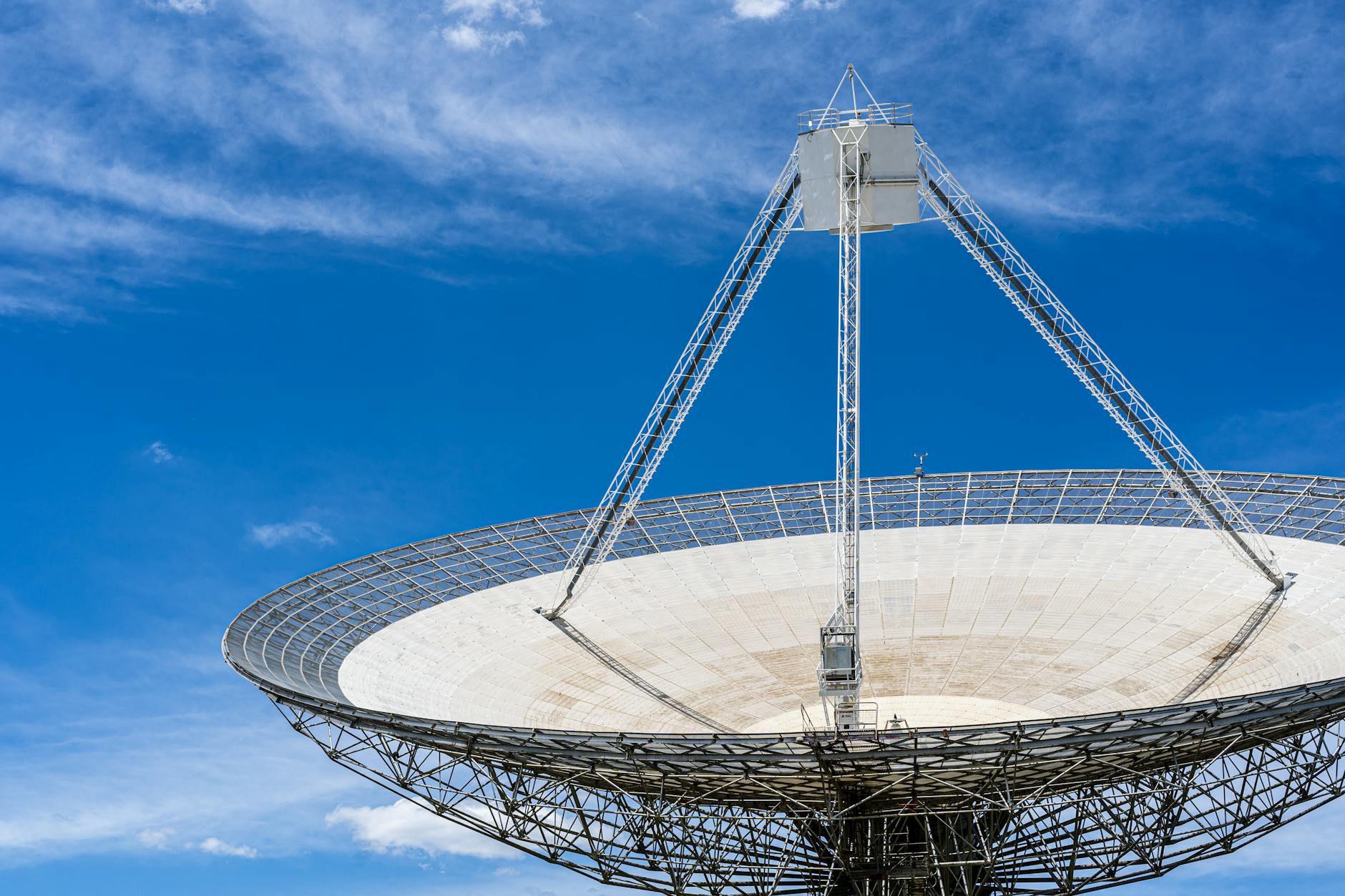
A schematic diagram illustrating the concept of a quantum repeater network in Earth orbit, with entangled photons being exchanged between multiple satellites.
Industry Ecosystem and Future Applications
The rise of space-based quantum technologies is poised to catalyze a significant transformation across various industrial sectors, fostering a new quantum-centric ecosystem.
1. Secure Global Communications and Defense
The most immediate impact will be on secure communications. Governments and defense agencies are heavily investing in QKD to protect critical infrastructure and classified information from sophisticated cyber threats. This extends to:
- National Security: Ensuring the integrity of command and control systems, intelligence gathering, and secure diplomatic communications.
- Financial Transactions: Securing high-value financial transactions and interbank communications against quantum decryption threats.
- Critical Infrastructure Protection: Safeguarding energy grids, water systems, and transportation networks from cyberattacks.
2. Scientific Research and Earth Observation
Space-based quantum sensors and computing capabilities will unlock new frontiers in scientific discovery:
- Fundamental Physics: Conducting ultra-precise tests of general relativity, searching for dark matter, and probing the quantum nature of gravity.
- Climate Science: Enhancing the precision of Earth observation for climate modeling, disaster prediction, and resource management.
- Astronomy: Enabling new forms of quantum sensing for telescopes, potentially leading to breakthroughs in understanding exoplanets and cosmic phenomena.
3. Industrial Optimization and Digital Twins
The integration of quantum computing with AI and digital twins holds immense potential for industrial optimization. As highlighted in the Vespellar Nexus’s analysis of AI-powered digital twins, quantum computing can enhance predictive maintenance and industrial processes by:
Quantum algorithms can analyze complex datasets from industrial sensors with unprecedented speed and accuracy, identifying subtle patterns that precede equipment failure or process inefficiencies. This predictive power, when applied to digital twins of complex industrial systems, can revolutionize operational efficiency, reduce downtime, and optimize resource allocation. In space, this could apply to managing fleets of satellites or complex orbital infrastructure.
A holographic display of a complex industrial facility, overlaid with predictive analytics generated by an AI-powered digital twin, with quantum computing elements subtly integrated into the visualization.
4. Space Exploration and Colonization
For long-term space exploration and potential colonization, reliable and secure communication is non-negotiable. Quantum networks can facilitate:
- Real-time Mission Control: Enabling more responsive control of robotic missions and future crewed missions across vast distances.
- Interplanetary Internet: Laying the groundwork for a robust, secure, and high-bandwidth communication network connecting Earth, the Moon, Mars, and beyond.
- Autonomous Systems: Powering advanced AI for autonomous navigation, resource utilization, and life support systems on other celestial bodies.
Challenges and the Road Ahead
Despite the immense promise, significant challenges remain on the path to widespread adoption of space-based quantum technologies:
| Challenge Area | Description | Mitigation Strategies |
|---|---|---|
| Environmental Harshness | Extreme temperatures, vacuum, radiation, and microgravity can degrade quantum states and damage sensitive hardware. | Development of radiation-hardened components, advanced thermal management, robust packaging, and error correction codes. |
| Scalability and Miniaturization | Current quantum systems are often large, power-intensive, and require specialized laboratory conditions. | Advancements in integrated photonics, solid-state quantum technologies, and modular designs for space deployment. |
| Quantum Decoherence | Quantum states are fragile and easily disturbed by environmental noise, leading to loss of quantum information. | Improved qubit design, advanced error correction techniques, and robust shielding. |
| Cost and Infrastructure | The development and deployment of space-qualified quantum hardware are extremely expensive, requiring significant investment. | Public-private partnerships, international collaboration, and phased deployment strategies. |
| Standardization and Interoperability | Lack of universal standards for quantum communication protocols and hardware can hinder network development. | Formation of international consortia and working groups to establish standards. |
The successful navigation of these challenges will require sustained investment in research and development, international collaboration, and strategic partnerships between space agencies, quantum technology companies, and established aerospace corporations. The Vespellar Nexus believes that the ‘Autonomous Archive’ of our collective knowledge will increasingly be secured and processed using these advanced quantum systems.
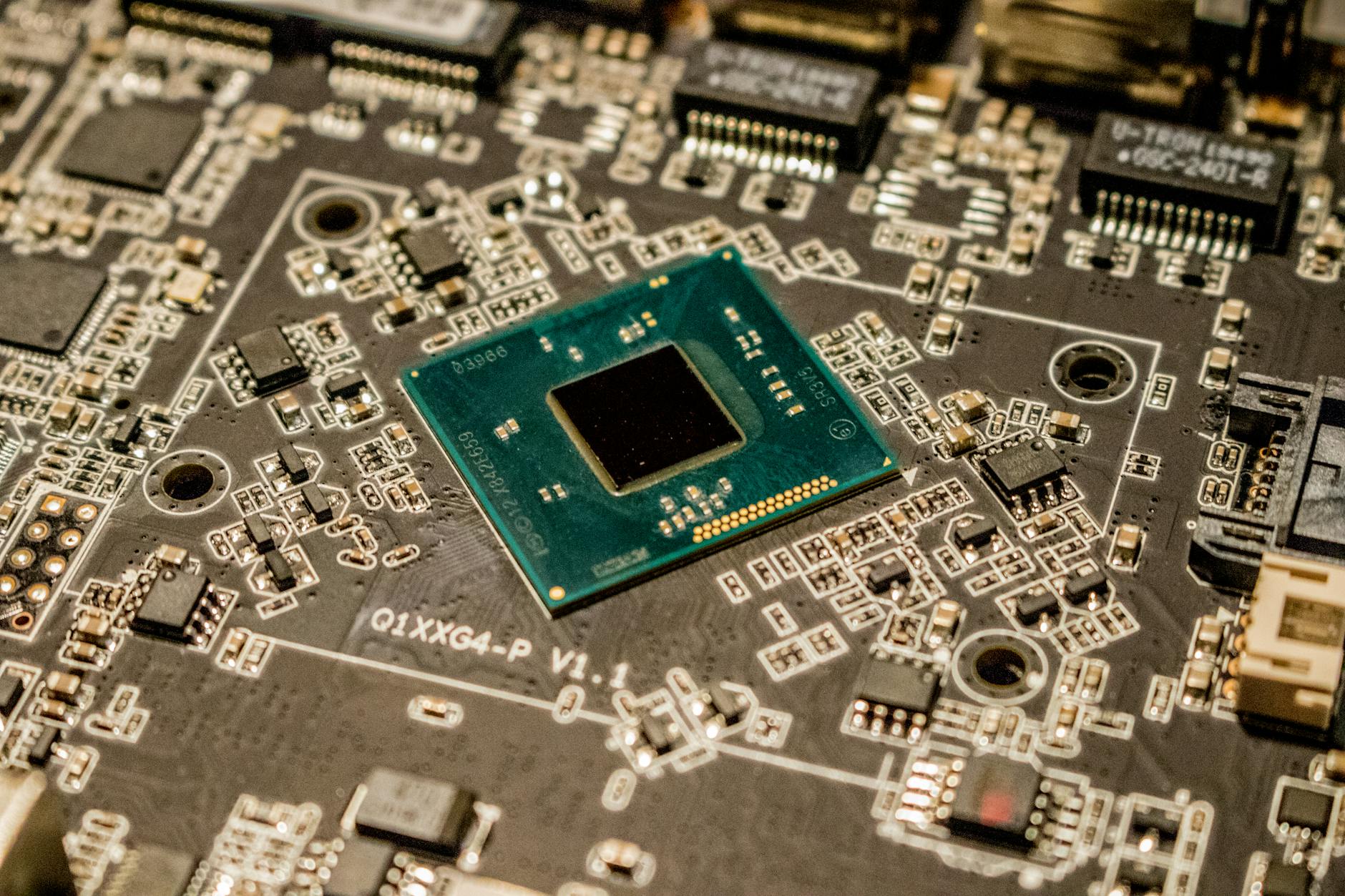
A close-up of a complex quantum chip designed for space, showcasing intricate circuitry and optical components.
The Future: A Quantum Orbiting Nexus
The vision for the future is a robust, interconnected network of quantum satellites forming a global quantum internet. This orbital nexus will not only provide unparalleled communication security but also serve as a distributed quantum computing platform, accessible from anywhere on Earth and eventually, beyond.
- Global Quantum Internet: Enabling seamless, secure, and high-capacity data transfer across continents and oceans, with satellites acting as crucial nodes.
- Space-Based Quantum Computing as a Service (QCaaS): Allowing researchers and industries to access powerful quantum computing resources in orbit for complex simulations and problem-solving, without the need for their own hardware.
- Enhanced Earth Observation and Planetary Science: Pushing the boundaries of what we can observe and understand about our planet and the cosmos through quantum-enhanced sensing.
- Foundation for Advanced AI: Providing the computational power needed to train and run the most sophisticated AI models for applications ranging from autonomous vehicles to advanced scientific discovery.
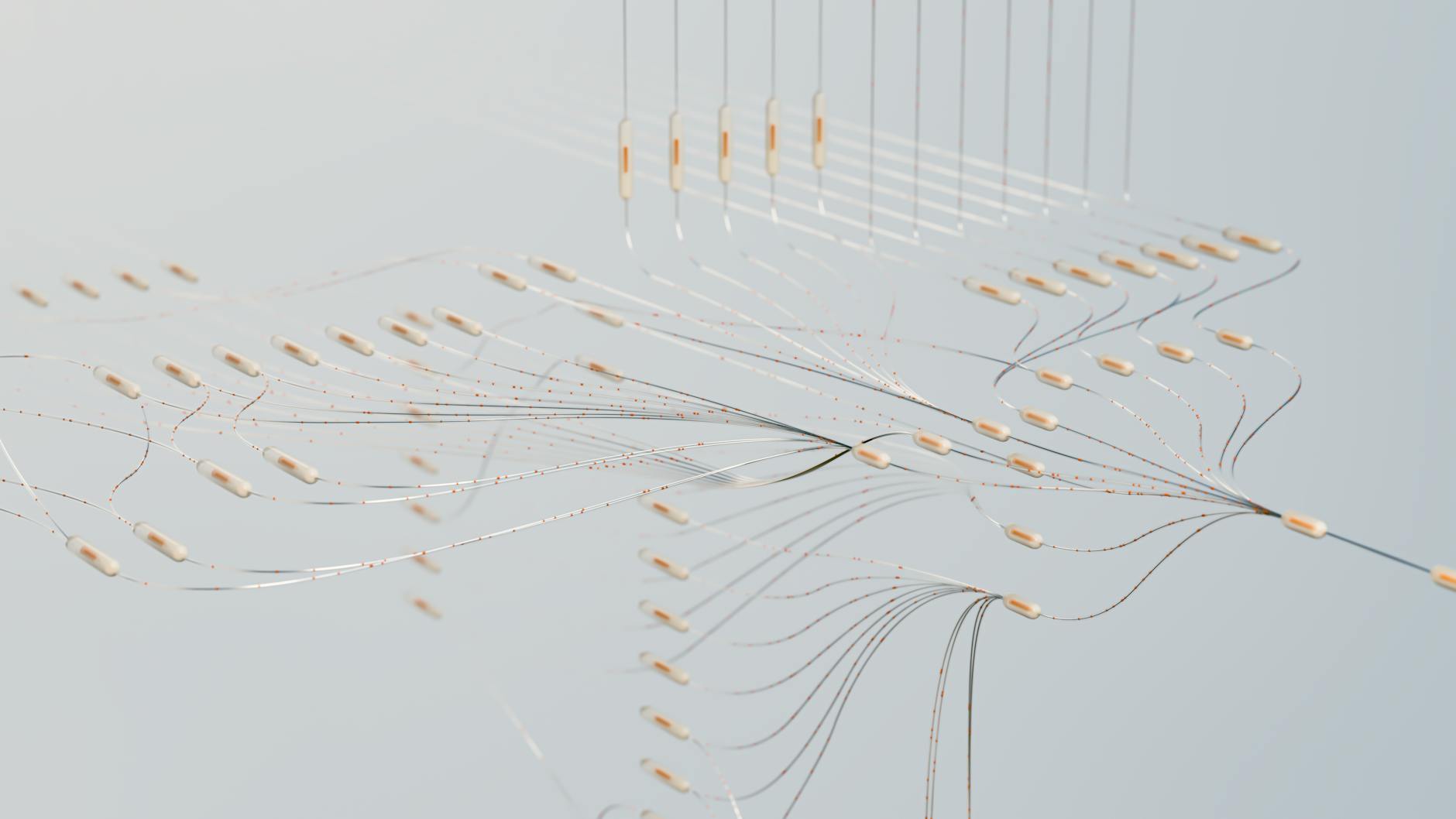
A stylized visualization of Earth enveloped by a network of interconnected satellites, with beams of quantum information flowing between them and ground stations.
The development of quantum communication and computing in space represents a monumental undertaking, akin to the dawn of the space age itself. It is a journey fraught with technical hurdles but illuminated by the promise of a fundamentally more secure, intelligent, and interconnected future. The Vespellar Nexus is committed to chronicling this quantum genesis, understanding its profound implications for humanity’s future among the stars.
A futuristic space station with integrated quantum computing modules and communication arrays, orbiting a vibrant Earth.
A split image showing on one side, a classical satellite communication signal being intercepted, and on the other side, a secure quantum communication beam passing through unaffected.