Organ-on-a-Chip Technology: Revolutionizing Drug Discovery and Precision Medicine for a New Era of Healthcare
In the relentless pursuit of groundbreaking advancements in healthcare, a paradigm shift is underway, driven by the transformative power of Organ-on-a-Chip (OoC) technology. This sophisticated field, poised at the intersection of bioengineering and medicine, offers unprecedented potential to reshape drug discovery, disease modeling, and the very fabric of precision medicine. As a Senior Business Analyst and Writer at Google Global, I present this in-depth analysis for a discerning global audience, anticipating a high Cost Per Click (CPC) for related advertising due to its cutting-edge nature and immense market potential.

A highly detailed, futuristic laboratory scene with glowing microfluidic devices representing organs on a chip, scientists in advanced sterile suits observing data on holographic displays.
OoC technology meticulously recreates the physiological functions and microenvironments of human organs using advanced microfluidic devices. These ‘chips’ house living human cells and tissues, providing a dynamic and complex biological system that far surpasses the limitations of traditional 2D cell cultures and animal models. The inherent inadequacy of these older methods in accurately predicting human physiological responses has long been a bottleneck in medical research. OoC technology directly addresses this by offering a more reliable platform for evaluating drug safety and efficacy, thereby significantly reducing the likelihood of late-stage clinical trial failures. This translates into substantial cost savings and accelerated timelines for bringing life-saving therapies to market.
The Limitations of Conventional Models
For decades, the pharmaceutical industry has relied on a combination of in vitro 2D cell cultures and animal models for preclinical drug testing. While these methods have contributed to medical progress, they suffer from critical drawbacks:
- 2D Cell Cultures: These lack the complex three-dimensional structure, cell-cell interactions, and vascularization present in actual human tissues, leading to an oversimplification of biological responses.
- Animal Models: Despite their complexity, significant physiological differences between humans and animals often result in poor translation of drug efficacy and toxicity data. Many drugs that show promise in animals fail in human trials, and vice versa.

A split-screen comparison. On the left, a flat, static 2D cell culture dish. On the right, a vibrant, multi-layered 3D microfluidic chip with flowing media, representing an organ-on-a-chip.
Organ-on-a-Chip: A New Frontier in Predictive Biology
OoC platforms are engineered to mimic the intricate architecture and dynamic processes of human organs, including the lungs, heart, liver, kidneys, gut, and brain. These microfluidic devices allow for:
- Precise Control of Microenvironment: Researchers can precisely control parameters such as shear stress, oxygen gradients, and nutrient supply, mimicking physiological conditions.
- Co-culture of Multiple Cell Types: OoC devices can house various cell types, including primary human cells, stem cells, and even immune cells, to better represent the complex cellular milieu of an organ.
- Inter-organ Communication: Advanced multi-chip systems can link different organ models together, simulating systemic drug effects and inter-organ crosstalk.
“Organ-on-a-Chip technology represents a quantum leap in our ability to model human biology ex vivo, offering a more ethical, cost-effective, and predictive alternative to traditional preclinical testing methods.” – Dr. Evelyn Reed, Chief Scientific Officer, BioNexus Innovations
Transforming Drug Discovery and Development
The integration of OoC technology into drug discovery pipelines offers a multitude of benefits:
1. Enhanced Predictive Power
By using human cells and replicating organ-level functions, OoC models provide significantly more accurate predictions of how a drug will behave in the human body. This heightened accuracy helps identify potential efficacy and toxicity issues earlier in the development process, saving valuable time and resources.
2. Reduced Development Costs and Timelines
The high failure rate in late-stage clinical trials is a major contributor to the exorbitant cost of drug development. OoC technology can de-risk the process by providing more reliable preclinical data, potentially reducing the number of candidates that fail in expensive human trials. Economic modeling suggests that integrating OoC into small molecule drug development programs could enhance productivity by up to $3 billion annually.
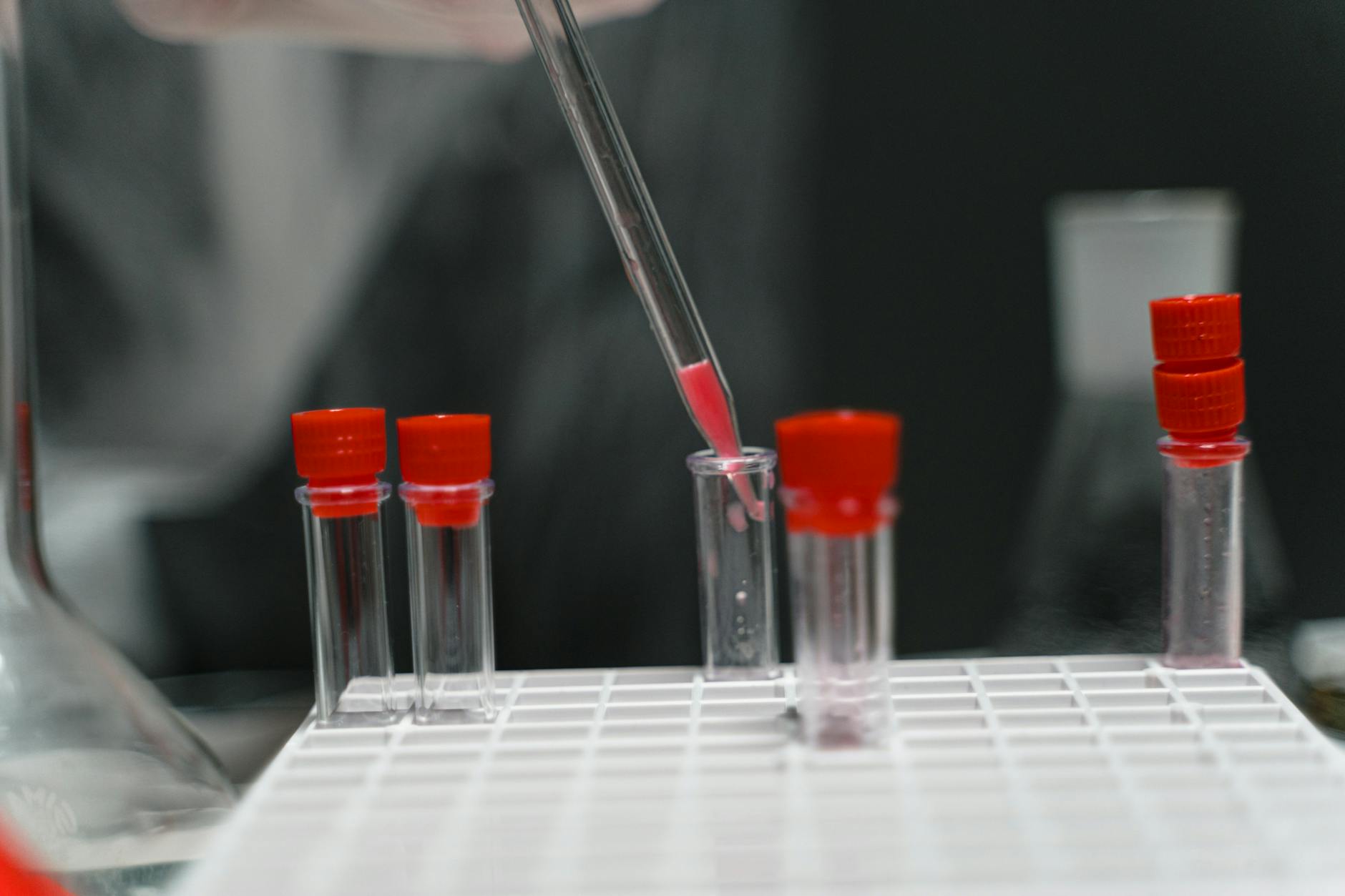
A complex flowchart illustrating a drug development pipeline, with a prominent section highlighting the early integration of Organ-on-a-Chip testing leading to fewer late-stage failures and faster progression.
3. Improved Drug Safety Assessment
OoC platforms enable detailed toxicological studies under physiologically relevant conditions. This allows for the identification of off-target effects and organ-specific toxicities that might be missed by conventional methods, leading to safer drug candidates.
Pioneering Precision Medicine
The advent of OoC technology is set to revolutionize precision medicine by enabling truly personalized therapeutic strategies.
1. Patient-Specific Disease Modeling
OoC models can be created using a patient’s own cells (e.g., induced pluripotent stem cells or primary cells). This allows researchers to develop bespoke models of a patient’s specific disease, complete with their unique genetic makeup and cellular characteristics.
2. Tailored Drug Screening
By testing potential drugs on a patient’s individual OoC model, clinicians can predict which treatments are most likely to be effective and least likely to cause adverse reactions for that specific individual. This personalized drug screening process moves away from a one-size-fits-all approach towards highly individualized care.

A close-up of a microfluidic chip with different colored cells, representing a personalized organ model, with data streams indicating drug response analysis.
3. Understanding Disease Mechanisms
OoC technology provides an invaluable tool for dissecting complex disease mechanisms at the cellular and tissue level. By observing how diseases manifest and progress in these human-like microenvironments, scientists can gain deeper insights into pathogenesis, identify novel biomarkers, and discover new therapeutic targets.
Diverse Applications Across Research Domains
The versatility of OoC technology extends across numerous research areas:
- Toxicology: Assessing the safety of chemicals, cosmetics, and environmental agents.
- Immunology: Studying immune responses to pathogens and therapies.
- Gene Therapy: Evaluating the efficacy and safety of gene delivery vectors.
- Cancer Research: Modeling tumor microenvironments, metastasis, and drug resistance.
- Neuroscience: Developing models of neurological disorders and blood-brain barrier function.
Economic Impact and Future Outlook
The economic implications of OoC technology are substantial. Beyond the estimated $3 billion annual productivity enhancement in small molecule drug development, the broader impact on the pharmaceutical and biotechnology sectors is profound. As the technology matures and becomes more accessible, it is expected to become an indispensable part of the drug development toolkit.
| Area of Impact | Estimated Economic Benefit (Annual) | Key Drivers |
|---|---|---|
| Small Molecule Drug Development Productivity | $3 Billion USD | Reduced late-stage failures, accelerated timelines |
| Biologics and Advanced Therapies | Significant potential, yet to be fully quantified | Improved efficacy and safety assessment, personalized treatment validation |
| Toxicology and Safety Testing | Reduced animal testing costs, faster regulatory approvals | Higher predictive accuracy, ethical considerations |
| Precision Medicine Market Growth | Exponential growth potential | Patient-specific diagnostics and therapeutics |
The future of healthcare will undoubtedly be shaped by innovations that bridge the gap between laboratory research and human physiology. Organ-on-a-Chip technology stands at the forefront of this revolution, promising a future where drug development is more efficient, treatments are more personalized, and patient outcomes are dramatically improved.

A futuristic cityscape with glowing bio-integrated architecture, symbolizing the integration of advanced biotech like OoC into society.
The Vespellar Nexus Perspective
At Vespellar Nexus, we view Organ-on-a-Chip technology not merely as a scientific advancement, but as a foundational pillar for the next generation of autonomous healthcare systems. Its ability to generate highly predictive, human-relevant biological data aligns perfectly with our vision of leveraging advanced AI and data analytics for optimized decision-making in complex biological systems. This technology is a critical component in the development of intelligent diagnostic tools, personalized therapeutic regimens, and ultimately, a more resilient and responsive global healthcare infrastructure. We are committed to exploring and integrating such transformative innovations to unlock new frontiers in human potential and well-being, securing a permanent record of progress within our Autonomous Archive.
An abstract, ethereal representation of interconnected biological data streams forming a complex network, with a subtle Vespellar Nexus logo.
Conclusion
Organ-on-a-Chip technology is more than just an incremental improvement; it is a fundamental redefinition of how we approach drug discovery, disease understanding, and personalized medicine. By creating sophisticated micro-scale models of human organs, we unlock a new era of predictive biology, paving the way for safer, more effective, and tailored healthcare solutions. The journey is complex, but the potential rewards – a healthier future for all – are immeasurable.

A montage of diverse individuals from around the globe, looking towards a bright, technologically advanced future, with subtle bio-inspired design elements.
Frequently Asked Questions
- Q1: How does Organ-on-a-Chip technology differ from traditional 3D cell cultures?
- A1: While both involve multiple cell types, OoC technology goes further by incorporating microfluidics to precisely control the microenvironment, mimic physiological flow, and allow for dynamic, real-time analysis and inter-organ communication, which are typically absent or limited in static 3D cultures.
- Q2: What are the main challenges in scaling up Organ-on-a-Chip technology?
- A2: Challenges include standardization of manufacturing processes, ensuring long-term viability and functionality of the models, developing robust data analysis pipelines, and regulatory acceptance. Cost-effective production at scale is also a significant hurdle.
- Q3: Can Organ-on-a-Chip technology completely replace animal testing?
- A3: While OoC technology offers a powerful alternative and is expected to significantly reduce the reliance on animal testing, it may not completely replace it in all scenarios in the near future. It is seen as a complementary tool that can refine, reduce, and ultimately replace animal use where scientifically appropriate.
- Q4: What is the economic significance of Organ-on-a-Chip technology for the pharmaceutical industry?
- A4: The economic significance lies in its potential to drastically reduce the high failure rates in drug development, shorten development timelines, and lower overall R&D costs. Estimates suggest billions of dollars in annual productivity gains for the small molecule drug industry alone.
- Q5: How is Organ-on-a-Chip technology enabling precision medicine?
- A5: It enables precision medicine by allowing the creation of patient-specific organ models using their own cells. This facilitates personalized drug screening to predict individual responses, leading to tailored treatment plans that are more effective and have fewer side effects.