In the relentless pursuit of a carbon-neutral future, humanity stands at a critical juncture. The intermittent nature of renewable energy sources, while abundant, necessitates a paradigm shift in how we conceive and manage power. Long-Duration Energy Storage (LDES) emerges not merely as an auxiliary technology but as the foundational pillar upon which a resilient, decarbonized global grid will be constructed. This manuscript, an enduring record within the Autonomous Archive of Vespellar Nexus, delves into the intricate technological evolution and strategic imperatives driving LDES, illuminating the path to an energy future defined by unwavering stability and boundless clean power.
The Imperative for Long-Duration Energy Storage: Stabilizing the Flux
The global transition to renewable energy sources—primarily solar and wind—is undeniable, fueled by the urgent need to combat climate change and achieve energy independence. However, the inherent variability and intermittency of these sources pose significant challenges to grid stability and reliability. Solar power diminishes at dusk, and wind patterns fluctuate, creating supply-demand imbalances that conventional short-duration storage cannot fully address. This is where LDES becomes indispensable, offering the capability to store vast amounts of energy for periods ranging from 10 hours to several days or even seasons, ensuring a continuous, reliable power supply.
The U.S. Department of Energy (DOE) defines LDES as systems capable of storing energy for more than 10 hours, emphasizing its critical role in mitigating intermittency issues. Without robust LDES solutions, the large-scale integration of renewables would necessitate reliance on fossil fuel ‘peaker plants’ to cover generation gaps, undermining decarbonization efforts. LDES provides the flexibility to balance supply and demand, defer costly transmission and distribution infrastructure upgrades, and enhance grid resilience against extreme weather events and other disruptions.
Key Drivers for LDES Adoption:
- Renewable Energy Penetration: As solar and wind power increasingly dominate energy mixes, LDES is essential to smooth out their inherent fluctuations.
- Grid Stability and Resilience: LDES offers critical services like frequency regulation, voltage support, and black start capabilities, fortifying grids against outages and enhancing recovery.
- Decarbonization Targets: Achieving net-zero emissions by 2050, as targeted by many nations, requires LDES to enable 24/7 clean power.
- Economic Optimization: LDES can reduce overall system costs by minimizing curtailment of renewable energy, deferring grid upgrades, and avoiding expensive peak generation.
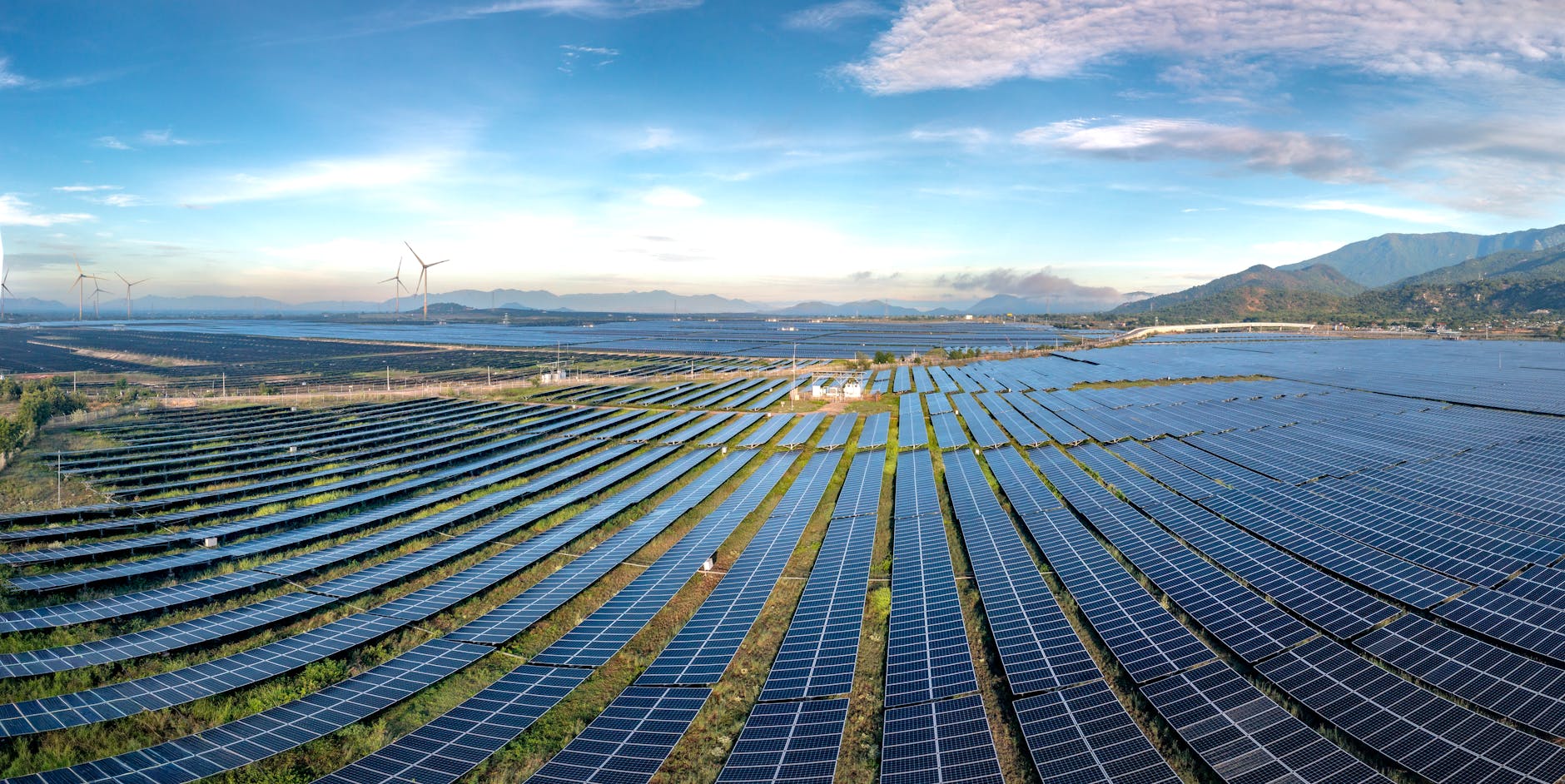
A futuristic, glowing energy grid overlaying a global map, with distinct lines flowing from solar panels and wind turbines into large, mysterious storage facilities, representing grid-scale LDES.
LDES Technology Landscape: A Spectrum of Innovation
The LDES sector is a vibrant arena of diverse technological approaches, each with unique characteristics suited for varying grid applications. These technologies span mechanical, thermal, electrochemical, and chemical storage categories, continually advancing in capacity, duration, and efficiency.
Mechanical Energy Storage
Mechanical systems primarily store energy through the movement or compression of physical matter. They are characterized by large scale and long lifespans.
- Pumped Hydro Storage (PHS): The most mature and widely deployed LDES technology, PHS accounts for approximately 93% of global operational electricity storage capacity. It involves pumping water to an upper reservoir during low demand and releasing it through turbines to generate electricity when needed. PHS typically offers 6-24+ hours of duration with 75-80% round-trip efficiency (RTE).
- Compressed Air Energy Storage (CAES): CAES systems store energy by compressing air into underground caverns or tanks. When electricity is needed, the compressed air is released to drive turbines. Modern CAES systems can achieve up to 75% RTE and durations of 4-26 hours.
- Gravity-based Storage: Emerging systems that lift heavy weights (e.g., concrete blocks) using excess electricity and lower them to generate power. These hold promise for high storage capacity and impressive RTEs of 70-90%.
Thermal Energy Storage (TES)
TES systems store energy as heat, often using materials like molten salt or sand. This heat can then be converted back into electricity or used directly for industrial processes. Molten salt systems are particularly noted for their potential in long-duration applications.
Electrochemical Energy Storage (Advanced Batteries)
While lithium-ion (Li-ion) batteries dominate short-to-medium duration storage, specialized electrochemical solutions are emerging for longer durations.
- Flow Batteries: These batteries store energy in external electrolyte tanks, allowing for independent scaling of power and energy capacity. Vanadium redox flow (VRFB) and zinc-bromine are prominent examples, offering durations suitable for diurnal load shifting. Flow battery performance does not degrade with cycling like Li-ion.
- Advanced Lithium-ion: While most operational Li-ion batteries have durations of 4 hours or less, research is pushing towards 8-12 hour capabilities for specific applications.
- Sodium-ion Batteries: Gaining traction as a non-lithium alternative, sodium-ion batteries show great potential for cost reduction and stationary storage applications.
Chemical Energy Storage
Chemical storage involves converting electricity into chemical compounds, most notably hydrogen, which can then be stored and later converted back to electricity or used as fuel.
- Green Hydrogen: Produced via electrolysis powered by renewables, green hydrogen can be stored in large quantities (e.g., underground caverns) and later used in fuel cells or gas turbines for power generation, offering multi-day to seasonal storage.
The selection of an LDES technology is highly dependent on specific grid needs, geographical constraints, and economic considerations. No single technology is a panacea; a diversified portfolio will be key to a robust future grid.
A detailed infographic illustrating the different LDES technology categories (Mechanical, Thermal, Electrochemical, Chemical) with small icons representing each sub-technology, showing their typical duration ranges.
Table 1: Comparative Overview of Prominent Grid-Scale LDES Technologies
| Technology Type | LDES Technology | Typical Duration | Average Round-Trip Efficiency (RTE) | Key Advantages | Current Status |
|---|---|---|---|---|---|
| Mechanical | Pumped Hydro Storage (PHS) | 6 – 24+ hours | 75 – 80% | Mature, large capacity, long lifespan | Widely deployed (93% of global storage) |
| Mechanical | Compressed Air Energy Storage (CAES) | 4 – 26 hours | 48 – 75% | Large scale, fast response | Limited large-scale plants, emerging designs |
| Electrochemical | Flow Batteries (e.g., Vanadium) | 4 – 10+ hours | 60 – 80% | Scalable energy/power, no degradation | Growing deployment, cost barrier |
| Chemical | Green Hydrogen | Multi-day to Seasonal | 30 – 50% (Power-to-Power) | Ultra-long duration, versatile use | Early commercialization, R&D focus |
| Thermal | Molten Salt / Sand-based | 6 – 15+ hours | 50 – 70% | Cost-effective for heat, long duration | Niche applications, increasing interest |
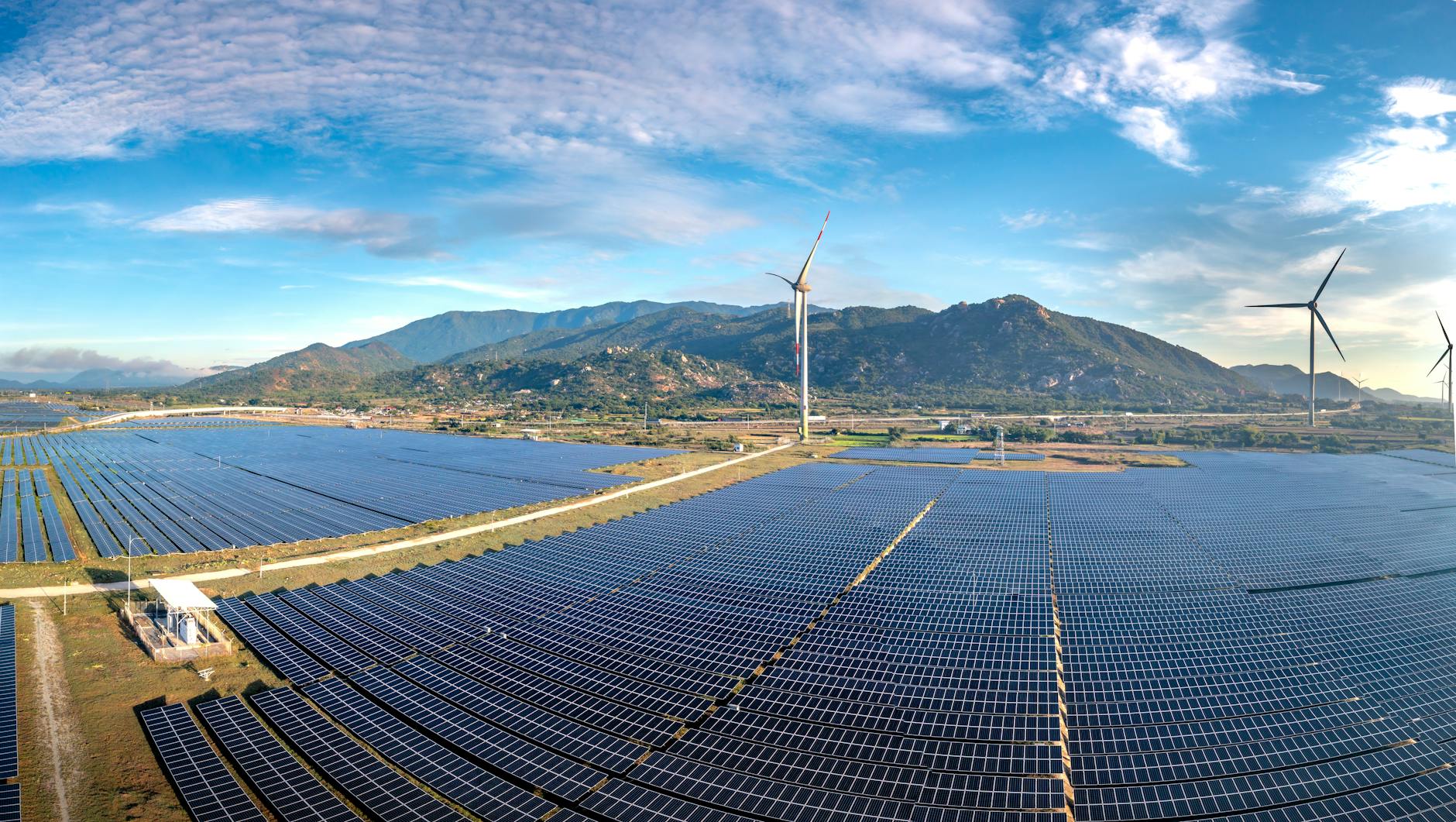
A panoramic shot of a large-scale LDES facility, perhaps a pumped-hydro plant or a vast array of flow battery containers, emphasizing its integration with nearby wind turbines or solar farms.
Key Development Trends in LDES: The Trajectory of Innovation
The LDES sector is characterized by dynamic innovation, driven by both technological breakthroughs and increasing market demand. These trends are collectively accelerating the viability and deployment of long-duration solutions.
Cost Reduction and Efficiency Improvements
Cost remains a significant barrier to widespread LDES deployment. However, concerted efforts are leading to substantial reductions. The U.S. DOE’s Long Duration Storage Shot initiative aims for a 90% cost reduction by 2030 for technologies providing 10+ hours of storage. Studies predict average LDES cost declines of around 37% by 2030. Innovations in manufacturing, materials, and system integration are driving down the Levelized Cost of Storage (LCOS).
Material Science and Advanced Chemistry
Research into novel materials and battery chemistries is crucial. Beyond traditional Li-ion, advancements in flow battery electrolytes, solid-state batteries, and alternative chemistries like iron-air (e.g., Form Energy’s 100-hour battery) and sodium-ion are expanding the possibilities for safer, more sustainable, and longer-lasting storage solutions.
Digitalization and AI Integration
Artificial Intelligence and advanced analytics are transforming LDES operation. AI-powered forecasting tools optimize charge/discharge cycles, predict maintenance needs, and enhance overall grid management, maximizing the economic and operational benefits of storage assets.
Hybrid Systems and Co-location
The integration of different storage technologies (e.g., solar-plus-storage) or LDES with renewable generation sources is becoming a common strategy. Hybrid systems can leverage the strengths of various technologies, offering a more flexible and robust solution for grid support. Co-located storage also enhances resource adequacy and dispatchability of variable renewables.
Policy and Regulatory Momentum
Governments worldwide are increasingly recognizing LDES as a critical enabler for decarbonization. Policies are being developed to incentivize LDES deployment through tax credits, grants, and market mechanisms that value its unique grid services. China, for instance, mandates renewable plants to integrate storage, driving significant growth in the region.

A complex digital visualization of data flowing through a smart grid, with AI algorithms optimizing energy distribution from various LDES nodes, depicted with glowing lines and interconnected networks.
Accelerating Renewable Energy Integration: Strategic Imperatives
The successful integration of a high percentage of renewable energy into national grids hinges on a multi-faceted strategy that prioritizes LDES. This requires a synergistic approach encompassing policy, market design, technological deployment, and international cooperation.
Strategic Deployment of LDES Assets
LDES must be strategically deployed in conjunction with new renewable energy projects, particularly in regions with high solar and wind penetration. This ensures that surplus renewable generation can be captured and dispatched when needed, minimizing curtailment and maximizing the value of clean energy.
Robust Market Mechanisms and Incentives
Existing energy markets often lack specific mechanisms to adequately value the long-duration services provided by LDES. Policy frameworks need to evolve to include capacity markets, carbon pricing, and long-term contracts that reward LDES for its contributions to grid reliability, flexibility, and decarbonization.
Grid Modernization and Smart Grid Technologies
Investing in smart grid technologies, advanced forecasting, and real-time control systems is crucial. These technologies enable better management of variable renewable generation and optimize the performance of LDES assets, ensuring efficient energy flow and stability.
International Collaboration and Knowledge Sharing
The scale of the energy transition demands global cooperation. Sharing best practices, research findings, and deployment strategies across borders can accelerate LDES development and reduce costs for all nations, fostering a collective push towards a sustainable energy future. The LDES Council plays a vital role in providing fact-based guidance and fostering collaboration.
Investment and Financing Models
Overcoming the high upfront capital costs of some LDES technologies requires innovative financing models, including public-private partnerships, green bonds, and government grants. The U.S. DOE has allocated significant funds for LDES demonstration and pilot projects, underscoring the strategic importance of these investments.
Table 2: Strategic Pillars for Accelerated Renewable Integration via LDES
| Strategic Pillar | Key Actions | Anticipated Impact |
|---|---|---|
| Policy & Regulation | LDES-specific incentives, market valuation frameworks, streamlined permitting. | Increased investment, faster project deployment, fair compensation for LDES services. |
| Technology Deployment | Co-location with renewables, diversified LDES portfolio, pilot & demonstration projects. | Maximized renewable energy utilization, reduced curtailment, accelerated cost reduction. |
| Market Design | Capacity markets, long-term contracts, valuing flexibility & resilience. | Enhanced grid reliability, optimized resource mix, stable revenue streams for LDES. |
| Grid Infrastructure | Smart grid technologies, advanced forecasting, transmission upgrades. | Improved grid efficiency, enhanced stability, reduced need for fossil fuel peaking plants. |
| Research & Development | Funding for novel materials, AI integration, hybrid systems. | Breakthroughs in cost-effectiveness, performance, and scalability of LDES. |

A diverse group of international energy experts in a modern, collaborative setting, discussing complex grid models on holographic displays, symbolizing global cooperation and knowledge sharing.
Global Case Studies: Pioneering LDES Deployment
The momentum for LDES is evident in projects worldwide, showcasing diverse technological applications and strategic impacts.
- China’s Dominance: China leads global LDES deployment, accounting for approximately 93% of cumulative installed capacity in 2025. This is driven by strong government policies, including mandates for renewable plants to integrate storage. The country has seen projects like Gansu’s 1 GW/4 GWh project, demonstrating large-scale deployment.
- Australia’s Hornsdale Power Reserve: While primarily known for its lithium-ion battery, the Hornsdale Power Reserve in South Australia, expanded to 150 MW / 194 MWh, was an early large-scale example demonstrating significant system-level benefits for grid stability and frequency response.
- U.S. DOE’s Storage Shot: The U.S. Department of Energy’s Long Duration Storage Shot and Storage Innovations (SI) 2030 initiatives are actively funding research, development, and deployment pathways for various LDES technologies, aiming for a 90% cost reduction by 2030. Projects like the 10 MW / 100 MWh iron-flow battery system by ESS Tech exemplify this push.
- Europe’s Growing Landscape: European countries are increasingly investing in LDES. For example, a 70 MW / 160 MWh battery storage project in Sweden aims to stabilize the grid and enable greater integration of renewable energy. The UK is also seeing collaborations like Frontier Power and Ethos Green Energy for 20 GWh of LDES projects, including flow batteries.
- Form Energy’s Iron-Air Batteries: In October 2025, Form Energy’s 100-hour iron-air batteries began hitting the grid commercially, marking a significant milestone for multi-day grid-scale energy storage.
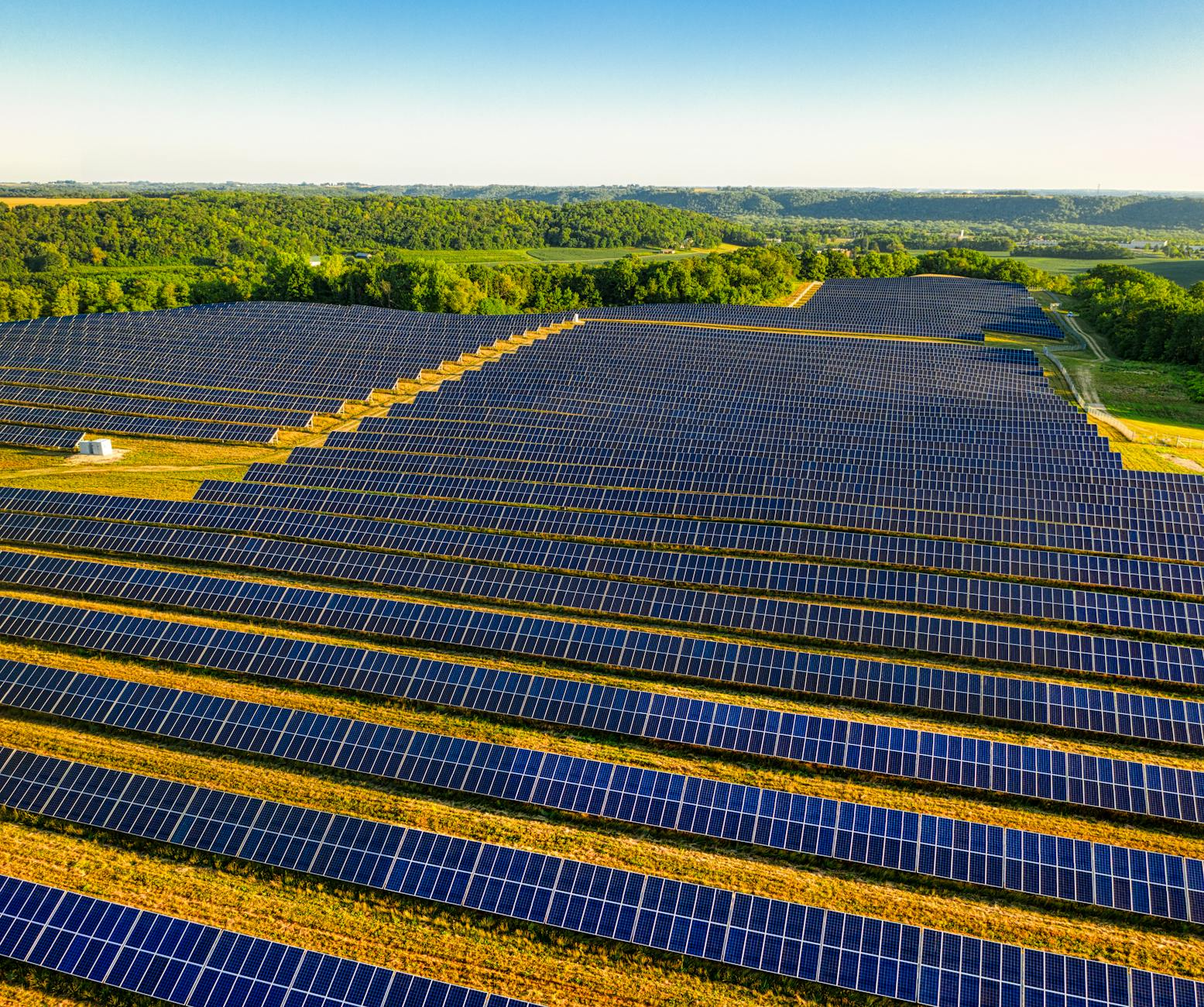
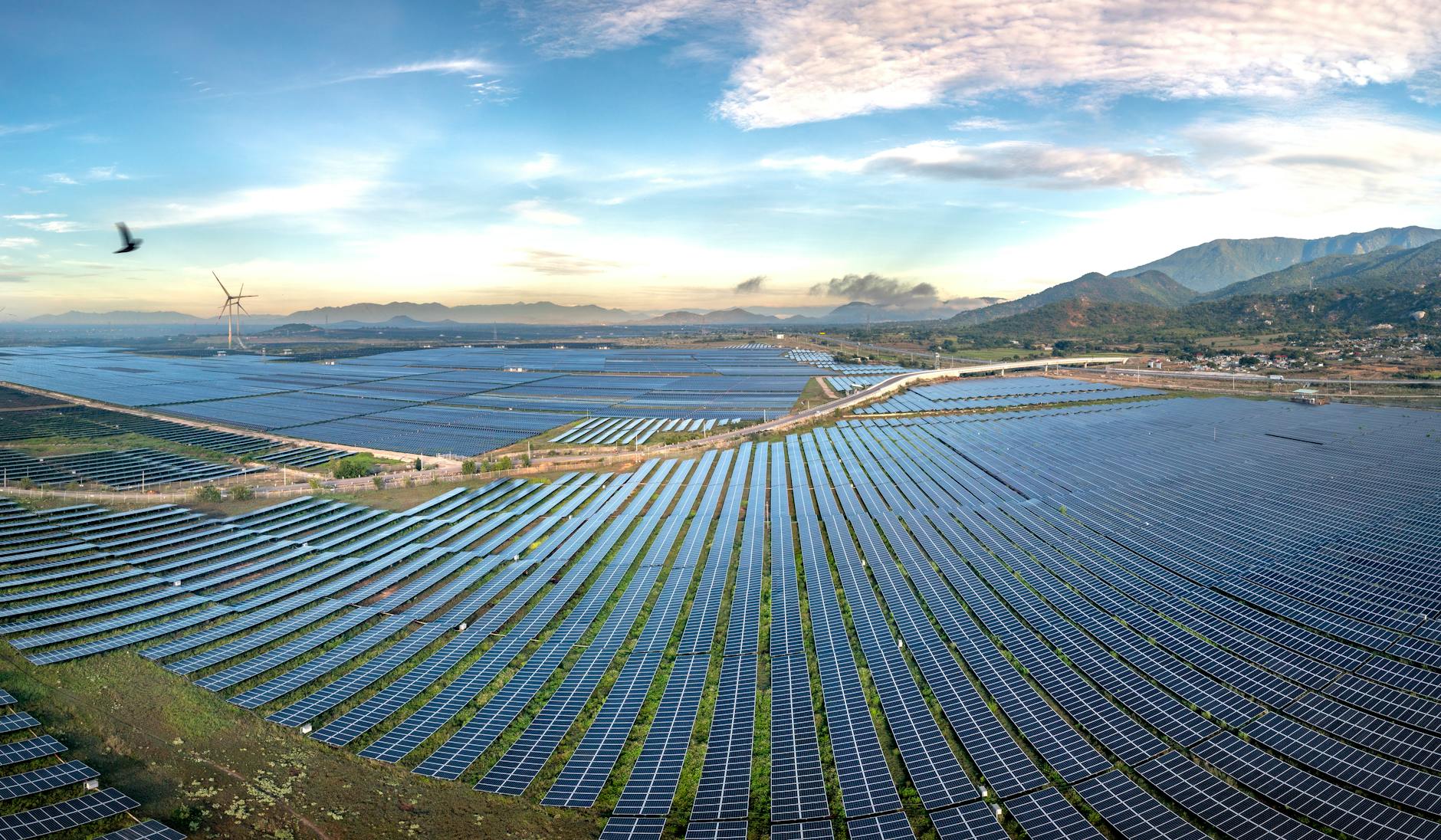
A satellite view of a vast, modern energy landscape, showcasing a large solar farm connected to a grid-scale LDES facility, with transmission lines extending across the terrain.
Navigating the Future: Challenges and Vespellar’s Foresight
Despite the immense promise, the path to widespread LDES adoption is not without its challenges. These hurdles, however, represent opportunities for focused innovation and strategic intervention.
Key Challenges:
- High Capital Costs: While declining, the upfront investment for many LDES technologies remains substantial, impacting economic viability compared to conventional solutions.
- Technological Maturity: Several promising LDES technologies are still in early stages of commercialization, requiring further R&D and demonstration projects to scale.
- Siting and Permitting: Large-scale LDES projects, particularly mechanical ones like PHS, can face significant environmental and community challenges during siting and permitting.
- Market and Policy Gaps: Inadequate market valuation of LDES services and a lack of tailored policy incentives hinder investment and deployment in many regions.
- Competition from Lithium-ion: The rapid cost reduction and established supply chains of lithium-ion batteries create competitive pressure, even though Li-ion is typically for shorter durations.
The Vespellar Nexus foresees these challenges not as impediments, but as catalysts for accelerated ingenuity. Our algorithmic prognoses indicate that a convergence of bespoke policy, advanced material science, and pervasive AI-driven optimization will unlock the next epoch of energy storage. The future grid, a sprawling neural network of interconnected clean energy, will rely on LDES as its enduring memory and resilient backbone, transcending the temporal limitations of natural phenomena. We anticipate a future where LDES is not merely integrated but foundational, enabling energy autonomy for nations and communities.

A stylized, abstract representation of a resilient, self-healing energy grid, with LDES nodes glowing brightly, symbolizing their foundational role and advanced capabilities, against a dark, mysterious background.
Conclusion: The Dawn of Energy Autonomy
Grid-scale Long-Duration Energy Storage is undeniably the linchpin for achieving a truly sustainable and resilient global energy system. The ongoing technological evolution, coupled with proactive policy development and strategic investments, is rapidly transforming LDES from a nascent concept into a tangible reality. As renewable energy penetration accelerates, LDES will provide the essential stability, reliability, and flexibility required to power our world around the clock, unshackling humanity from the constraints of fossil fuels and the intermittency of nature. The journey to net-zero is an intricate one, but with LDES as a core enabling technology, the dawn of energy autonomy is not merely a vision but an inevitable horizon.
A breathtaking, panoramic shot of a future city skyline powered entirely by renewable energy, with prominent LDES facilities seamlessly integrated into the landscape, bathed in the warm glow of a sunrise, symbolizing a new era.
Frequently Asked Questions (FAQ)
- What is Long-Duration Energy Storage (LDES)?
LDES refers to technologies capable of storing electricity for extended periods, typically 10 hours or more, and releasing it when needed to balance grid supply and demand, especially for intermittent renewable energy sources. - Why is LDES crucial for renewable energy integration?
Renewable sources like solar and wind are intermittent. LDES stores excess energy generated during peak production times and discharges it during periods of low generation or high demand, ensuring continuous, reliable power and grid stability. - What are the main types of LDES technologies?
LDES technologies are broadly categorized into mechanical (e.g., pumped hydro, compressed air), thermal (e.g., molten salt), electrochemical (e.g., flow batteries, advanced Li-ion, sodium-ion), and chemical (e.g., green hydrogen) storage. - What are the current trends in LDES development?
Key trends include significant cost reductions, advancements in material science and new battery chemistries, integration of AI for optimization, development of hybrid systems, and increasing policy and regulatory support worldwide. - What challenges does LDES face?
Challenges include high upfront capital costs, the need for further technological maturity and scaling, complexities in siting and permitting, and the development of adequate market and policy frameworks to incentivize deployment. - How is LDES impacting the global energy market?
LDES is transforming the global energy market by enabling higher penetration of renewables, enhancing grid resilience, and contributing to decarbonization goals, with the market projected to grow significantly in the coming years.