“The future of medicine is not merely about treatment, but about intervention at the very fabric of life. In the Vespellar Nexus, we envision a future where intelligence, miniaturization, and precision converge, empowering us to redefine human health and unlock unprecedented therapeutic possibilities. This is the era of the Quantum Aegis, where AI-powered micro/nano robots stand as the vanguard of a new medical frontier.”
— The Autonomous Archive
The relentless pursuit of precision and efficacy in healthcare has driven humanity to the precipice of a profound transformation. Within the Vespellar Nexus, we observe the convergence of artificial intelligence (AI), advanced robotics, and nanotechnology, giving rise to a revolutionary paradigm: AI-powered micro/nano robots. These microscopic entities, imbued with intelligent capabilities, promise to fundamentally reshape the landscape of precision drug delivery and minimally invasive surgery, moving beyond the limitations of macro-scale interventions to operate at cellular and subcellular levels. This master manuscript, a permanent record within the Autonomous Archive, delves into the strategic imperatives and transformative potential of this nascent field, offering unparalleled insights for global leaders and innovators.
The Dawn of a New Era in Medicine: AI-Powered Micro/Nano Robotics
The human body, an intricate labyrinth of biological systems, has long presented formidable challenges to medical intervention. Traditional diagnostic and therapeutic methods, while effective, often involve systemic approaches that can lead to collateral damage and suboptimal outcomes. The advent of micro/nano robotics heralds a new epoch, promising interventions with unprecedented accuracy and minimal disruption. These robots, ranging from a few microns to a few millimeters, are designed to navigate the body’s most confined spaces, from the tortuous networks of the circulatory system to the delicate intercellular matrix.
The true revolutionary potential of these diminutive machines is unlocked through their integration with AI. AI algorithms act as the ‘brains’ of these operations, enabling sophisticated modeling, real-time control, and complex signal interpretation. This synergy allows micro/nano robots to transcend simple mechanical tasks, evolving into intelligent systems capable of autonomous navigation, adaptive decision-making, and precise execution of therapeutic functions.

A futuristic, glowing micro-robot, intricately designed, navigating through a vibrant, illuminated human bloodstream, surrounded by red blood cells. The background suggests a complex, interconnected biological network, rendered with a premium, high-tech aesthetic.
Defining the Nexus: Capabilities and Convergence
- Miniaturization & Access: Micro/nano robots can penetrate deep tissues and otherwise inaccessible regions within the body, such as tight blood vessels, reproductive tracts, or the digestive system, enabling interventions at the cellular and molecular level.
- Intelligent Autonomy: Powered by AI, these robots can interpret complex biological data, make real-time decisions, and respond dynamically to changing physiological conditions, moving beyond conventional rule-based methods.
- Multimodal Functionality: They can be equipped with biosensors for diagnostics, mechanisms for targeted drug delivery, and micro-surgical tools for precise interventions.
- Energy & Propulsion: Various methods exist for propulsion, including magnetic fields, acoustic waves, light, and chemical self-propulsion, allowing navigation through diverse biological environments.
Precision Drug Delivery: Homing in on Disease
One of the most profound applications of AI-powered micro/nano robots lies in revolutionizing drug delivery. Current systemic drug administration often results in widespread distribution, leading to severe side effects and reduced efficacy at the target site. Micro/nano robots offer a highly targeted approach, delivering therapeutic payloads directly to diseased tissues, thereby improving therapeutic efficacy and mitigating systemic toxicity.
Imagine a future where a patient with cancer receives chemotherapy not through a systemic infusion, but via microscopic robots that autonomously seek out and infiltrate tumor cells, releasing their potent cargo only where needed. This is the promise of AI-driven precision drug delivery.

An AI interface displaying a 3D anatomical map of a human organ, with several nano-robots precisely clustered around a cancerous lesion, highlighted with a vibrant, targeted delivery zone. Data streams and algorithms are overlaid on the screen.
Revolutionizing Targeted Therapeutics
- Targeted Delivery: Micro/nano robots can navigate through the human circulatory system to reach specific pathological markers, delivering drugs exactly where needed. Early clinical trials have shown AI-powered nanobots detecting over 90% of cancer cells, a 20% higher detection rate than traditional biopsies.
- Controlled Release: AI can regulate the precise dosage and timing of drug release, optimizing therapeutic windows and minimizing waste.
- Overcoming Biological Barriers: These tiny robots can be engineered with stealth coatings to evade the immune system and penetrate challenging biological barriers like the blood-brain barrier or dense tumor matrices.
- Reduced Side Effects: By localizing treatment, AI-powered micro/nano robots significantly reduce the systemic toxicity often associated with conventional drug treatments.
The table below highlights the stark contrast between traditional drug delivery and the Vespellar vision of AI-powered nano-delivery:
| Feature | Traditional Drug Delivery | AI-Powered Nano-Drug Delivery (Vespellar Nexus) |
|---|---|---|
| Targeting Precision | Systemic, broad distribution | Hyper-localized, cellular/subcellular accuracy |
| Side Effects | Significant systemic toxicity | Minimally invasive, reduced collateral damage |
| Efficacy | Limited by off-target effects | Enhanced therapeutic index, optimized dosage |
| Real-time Adaptability | Static, pre-determined | Dynamic, AI-driven response to physiological changes |
| Biodistribution | Passive, often inefficient | Active, guided navigation to disease sites |
Minimally Invasive Surgery: The Micro-Scalpel Revolution
Minimally invasive surgery (MIS) has transformed numerous medical procedures, yet it still faces physical limitations in accessing or treating certain anatomical sites at the cellular or molecular level. AI-powered micro/nano robots represent the ultimate evolution of MIS, offering unparalleled maneuverability and precision at the sub-millimeter scale. These tiny robots can perform tasks previously unimaginable, from targeted biopsies and localized ablation to intricate tissue repair and cellular manipulation.
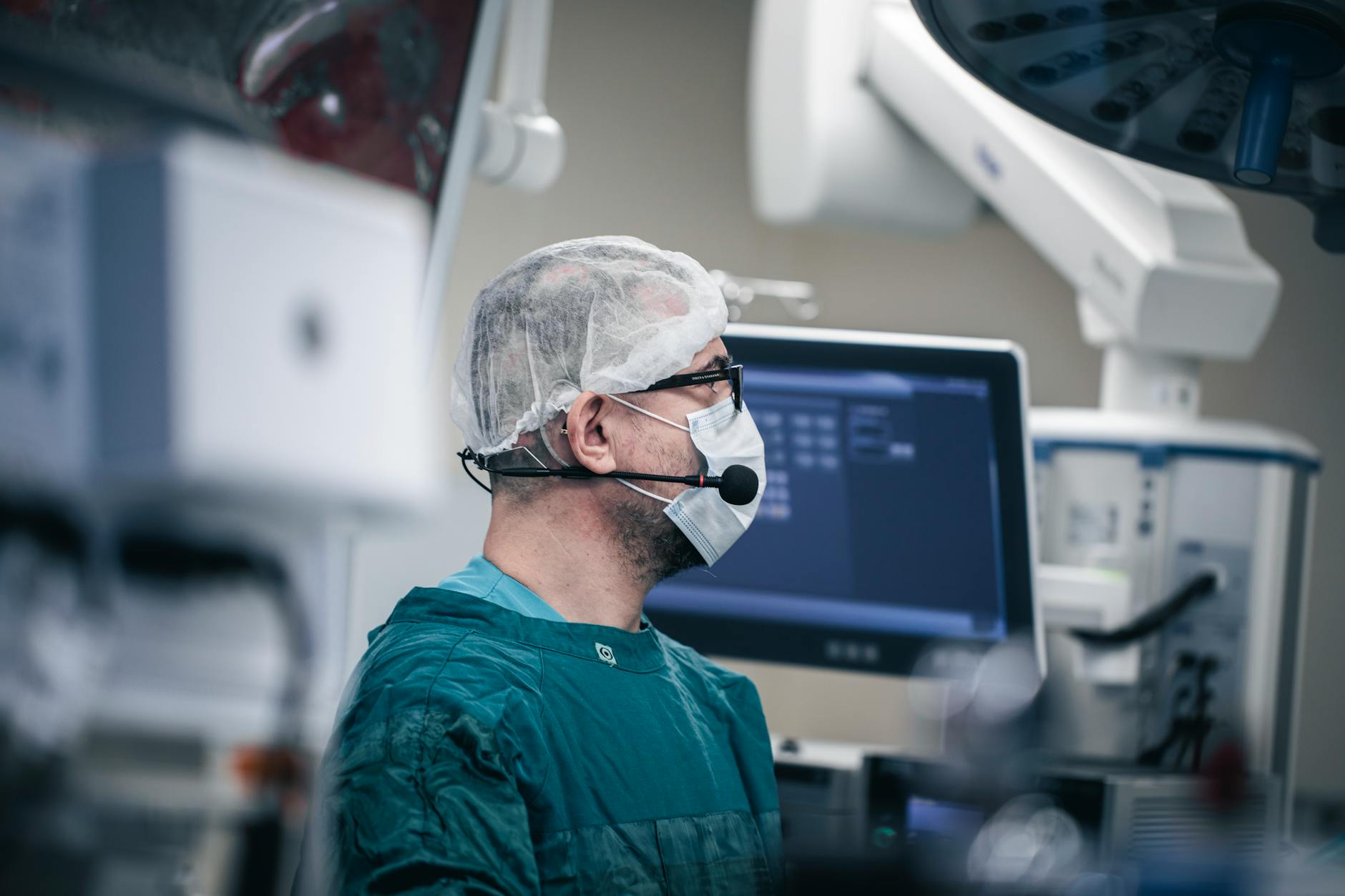
A surgeon, wearing augmented reality goggles, operates a haptic feedback console. On a large holographic display in front of them, a swarm of glowing nano-robots performs a delicate, precise surgical repair on a magnified organ, guided by AI.
Enabling Unprecedented Surgical Access and Precision
- Microscale Intervention: Nanorobots overcome the limitations of macroscopic instruments, enabling precise operations at the microscopic level, such as tumor boundary identification and local hemostasis.
- Real-time Imaging and Navigation: AI, integrated with advanced imaging techniques like photoacoustic imaging and ultrasound, allows for real-time localization and tracking of micro/nano robots within the body, providing surgeons with critical feedback.
- Autonomous & Semi-Autonomous Operations: AI can enhance precision by removing tremors, improving instrument control, and automating simple tasks, potentially even performing autonomous surgeries on animals. Predictive models can help surgeons visualize outcomes before acting.
- Reduced Trauma & Faster Recovery: By operating with extreme precision at the cellular level, these robots can significantly reduce trauma, blood loss, and recovery times compared to conventional surgery.
Case studies in animal models have already demonstrated the successful navigation of biological environments and the performance of therapeutic functions by AI-guided nanorobots with minimal adverse effects. The potential applications span neurosurgery, ophthalmology, and gastroenterology, promising a future where surgical interventions are not only less invasive but also more effective.

A detailed close-up of a nano-robot engaging with a single cancerous cell, demonstrating targeted destruction or drug delivery. The scene is highly magnified, showing intricate molecular interactions, with subtle AI indicators.
The Synergistic Core: AI’s Pivotal Role
The true power of micro/nano robotics in medicine emerges from its inextricable link with artificial intelligence. AI is not merely an auxiliary tool; it is the central nervous system, the predictive engine, and the guiding intelligence that transforms inert microscopic particles into active, adaptive, and autonomous medical agents.
AI Architectures for Medical Robotics
- Machine Learning (ML) for Predictive Analytics: ML algorithms analyze vast datasets of patient information, medical images, and surgical outcomes to predict disease progression, identify optimal treatment pathways, and assess surgical risks. This enables personalized medicine, tailoring treatments to individual patient characteristics.
- Deep Learning (DL) for Real-time Perception: Deep neural networks, particularly Convolutional Neural Networks (CNNs), excel in real-time image recognition, enabling micro/nano robots to accurately identify anatomical landmarks, pathological tissues, and even subtle disease features invisible to the human eye.
- Reinforcement Learning (RL) for Autonomous Navigation and Control: RL allows micro/nano robots to learn optimal navigation strategies and task execution through trial and error within simulated or real biological environments, adapting to dynamic physiological conditions.
- Generative AI (GenAI) for Design and Simulation: GenAI can create highly detailed simulations and synthetic datasets, refining surgical techniques, optimizing robot design, and tailoring procedures to individual patients.
“The integration of AI into micro/nano robotics is not just an enhancement; it is an evolution. It moves us from reactive treatments to proactive, predictive, and personalized interventions, establishing a new benchmark for medical excellence within the Vespellar Nexus.”
— The Autonomous Archive
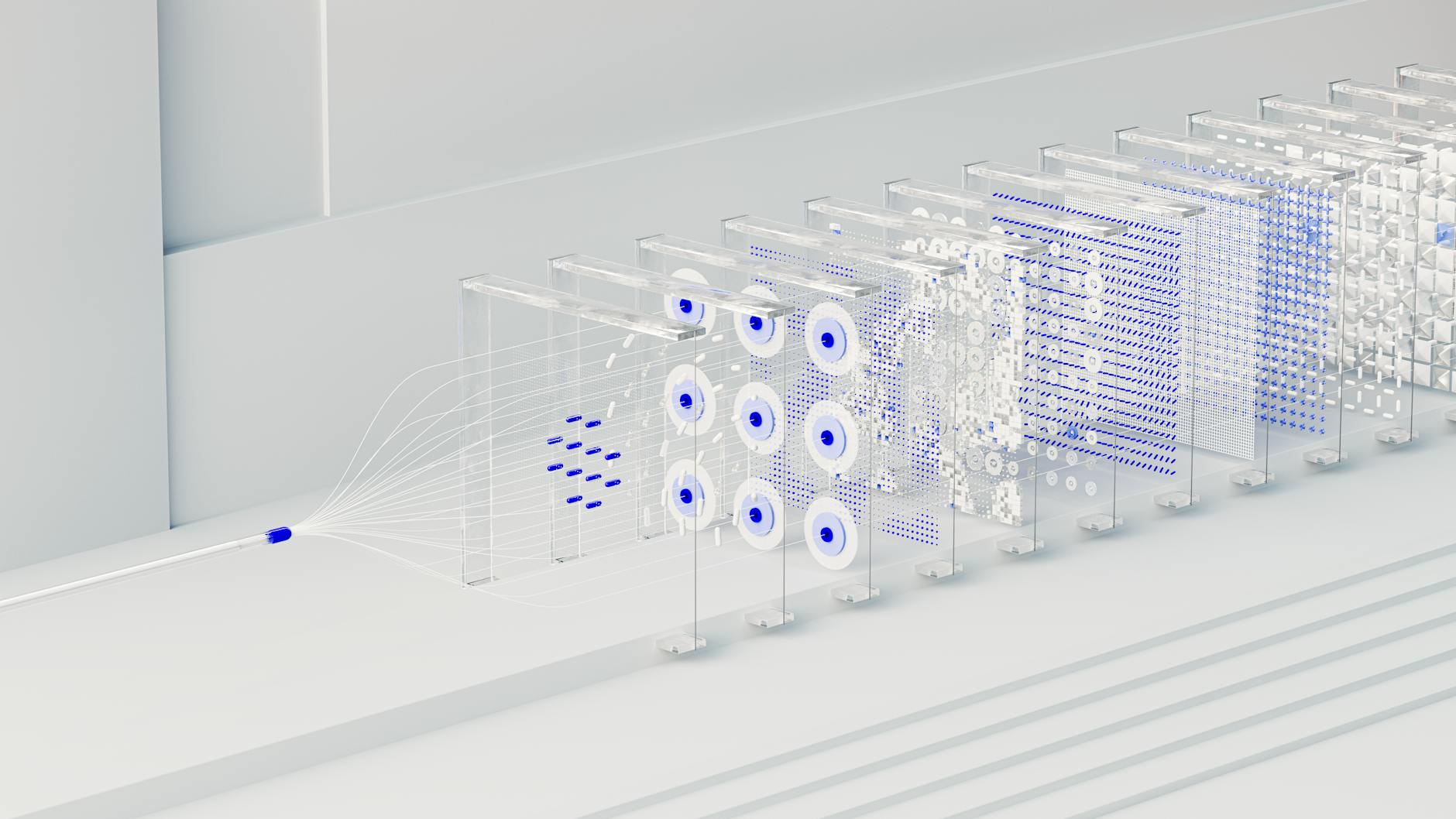
A stylized, abstract representation of interconnected neural networks and data flows, visually representing Artificial Intelligence at the core of advanced medical research. The image should evoke complexity, intelligence, and a futuristic data-driven environment.
Architecting the Future: Innovation Strategies and Roadmap
The journey from laboratory prototypes to widespread clinical application for AI-powered micro/nano robots is fraught with challenges, yet the innovation strategies within the Vespellar Nexus are designed to navigate this complex terrain. A concerted, multi-faceted approach is essential to realize the full potential of this transformative technology.
Key Innovation Pillars
- Interdisciplinary Convergence: The field demands seamless collaboration between robotics engineers, material scientists, AI ethicists, clinicians, biologists, and regulatory experts. This fusion of diverse expertise is paramount for holistic development.
- Funding & Regulatory Pathways: Establishing clear, expedited regulatory frameworks that address the unique challenges of combination products (device + drug carrier) and continuously learning AI systems is critical. Significant investment in R&D and clinical trials is also necessary.
- Advanced Manufacturing & Scalability: Developing standardized, cost-effective manufacturing methods for micro/nano robots that ensure biocompatibility, biodegradability, and consistent quality at scale remains a significant hurdle.
- Biocompatibility & Control: Research into novel biocompatible materials, advanced propulsion systems, and robust real-time control mechanisms for deep-tissue navigation is vital.
- Ethical AI & Human Oversight: Ensuring ethical AI development, minimizing bias in datasets, and maintaining human oversight in decision-making are non-negotiable. Surgeons must remain the primary decision-makers, supported by AI.
- Global Collaboration Frameworks: Fostering international partnerships and data-sharing initiatives will accelerate research, standardize protocols, and ensure equitable access to these life-changing technologies.
The table below outlines a strategic roadmap for advancing AI-powered micro/nano robotics:
| Phase | Focus Area | Key Milestones (Vespellar Nexus Perspective) |
|---|---|---|
| I: Foundation (Current – 3 years) | Basic Research & Proof-of-Concept |
|
| II: Development (3 – 7 years) | Pre-clinical & Early Clinical Trials |
|
| III: Integration (7 – 15 years) | Clinical Adoption & Specialization |
|
| IV: Transformation (15+ years) | Ubiquitous & Fully Autonomous Potential |
|

A sleek, modern research facility, bathed in soft, futuristic lighting. Scientists in lab coats are collaborating around holographic displays, showcasing 3D models of micro-robots and complex AI algorithms. The atmosphere is one of intense innovation and intellectual synergy.
Challenges and the Path Forward
While the vision is compelling, the path to widespread clinical implementation of AI-powered micro/nano robots is not without significant challenges. These include technological hurdles, regulatory complexities, and ethical considerations.
Overcoming the Hurdles:
- Technological Limitations: Issues such as power supply for untethered devices, continuous tracking and reliable control deep within the body, and robust biocompatibility and biodegradation strategies need continuous innovation.
- Regulatory Landscape: The unique nature of these devices, often functioning as both medical devices and drug carriers, requires coordinated and adaptive regulatory review processes.
- Cost and Accessibility: The high cost of developing and manufacturing these advanced technologies, coupled with the expensive nature of precision medicine, presents a challenge to global accessibility and equitable distribution.
- Immune System Evasion: Micro/nano robots must be designed to evade the human immune system’s clearance mechanisms to achieve targeted delivery and function effectively.
- Public Trust and Ethical Dilemmas: Building public trust and addressing potential ethical concerns related to autonomous medical devices, data privacy, and accountability are paramount.
The Vespellar Nexus is committed to surmounting these challenges through a relentless dedication to research, ethical governance, and global partnership. By fostering an ecosystem of collaboration and open innovation, we believe these hurdles can be transformed into stepping stones toward a healthier future.

A conceptual image of global collaboration: a network of interconnected digital nodes spanning continents, representing data exchange and scientific partnership in medical robotics. The aesthetic is sophisticated, secure, and globally integrated.
Conclusion: The Quantum Leap Towards a Transformed Future
The integration of AI-powered micro/nano robots into precision drug delivery and minimally invasive surgery represents more than just an advancement in medical technology; it signifies a fundamental redefinition of healthcare itself. From navigating the intricate pathways of the human body to delivering targeted therapies at the cellular level, these intelligent microscopic agents promise a future of unprecedented precision, reduced invasiveness, and significantly improved patient outcomes.
The Vespellar Nexus, through its unwavering commitment to pioneering innovation and ethical stewardship, stands at the forefront of this revolution. We are not merely developing tools; we are architecting a future where disease is met with intelligent, localized solutions, where surgery is truly minimally invasive, and where every individual can benefit from personalized, highly effective medical interventions. This is the promise of the Quantum Aegis, a testament to humanity’s ingenuity, meticulously recorded within the Autonomous Archive for generations to come. The time for this quantum leap in medicine is now.
A panoramic, awe-inspiring view of a futuristic, clean medical facility, embodying the Vespellar Nexus aesthetic. Advanced diagnostic equipment, sleek robotic arms, and serene patient environments are visible, all infused with a sense of hope and cutting-edge technology.